Jumamosi, Katika Fukwe za Zanzibar....


An estimated 21,000 jobs were lost at the Coast last year, while tourism sector earnings may have fallen by as much as 85 per cent, according to companies in the industry.
The sector’s misfortunes worsened after the September 2013 terrorist attack on the Westgate Shopping Mall, tour operators say, after which insecurity has continued unabated.
The decline in number of foreign tourists, traditionally a key source for foreign currency inflows, has sent ripples to other sectors in a contagion that “is beginning to be painful”.
Adam Jillo, a tour operator and Kenya Private Sector Alliance board member in charge of security and tourism, said sectors already feeling the contagion include air transport, agriculture and food distribution, auto industry, credit and construction.
“Zanzibar has today take away up to 90 per cent of what was the Kenyan Coast tourism market until three years ago,” Jillo said at a Kepsa briefing on Wednesday, without citing absolute numbers.
“Many hotels have been forced to close down and others will be closing down soon.”
Kenya earned $2 billion – Sh183.34 billion at the current exchange rate – in 2012 international tourism receipts, World Bank data show, but this has been on decline over the past two years owing to persistent insecurity.
Latest foreign visitors arrival data is expected this Friday from the government statistician, but seven-month numbers already showed a decline of 16.9 per cent to 514,889, from 619,472 foreign tourists in 2013.
Kenya Tourism Board figures show a total of 1.1 million visitors flew into the country in 2013 compared to 1.23 million in 2012, a 10.4 per cent decline.
Impact of the ailing tourism sector caught up with lenders in 2014 third quarter as borrowing slowed, according to Central Bank’s credit report.
Out of 11 cluster sectors, the hospitality industry was the only one that did not record growth in loans and advances in the three months to September 30 despite the country’s relative calm over the period.
The total loans and advances to the hospitality industry amounted to Sh33.9 billion at the end of September compared to Sh41.5 billion in June. The 18.3 per cent decline indicated that the sector was merely repaying old loans and not taking new credit.
“Tour operators are in the same situation as the hoteliers; there are no safari jobs and they have vehicles to maintain and loans owed to banks,” said Jillo, who is also the Kenya Tour Operators Association chairman.
- See more at: http://the-star.co.ke/news/tourism-sector-job-cuts-rise-kenya-loses-out-zanzibar#sthash.pAq6PZoN.dpuf
Could a 12-step program, with its Christian roots, help addicts recover on a conservative Muslim island in the Indian Ocean?

Suleiman Mauly was desperate to find out. He'd been using heroin in his native Zanzibar since age 17. The island nation is a key stop for heroin smuggled from Pakistan and Afghanistan to Europe. An estimated 7 percent of the 1 million inhabitants are heroin addicts.
Mauly had tried to get clean a couple of times. It didn't work. Then he discovered a 12-step program in Mombasa, Kenya.
He not only stopped using drugs but also made amends to friends and family he'd harmed as an addict. "And before you make amends, you have to search yourself, your feelings of guilt and resentment," says Mauly, now 34 and in recovery for eight years. "It's a kind of Christian spiritual process." Indeed, the 12-step program, founded in Akron, Ohio, some 80 years ago, relies on Christian concepts: confession, redemption, submission to a higher power.
"People have different experiences with the higher power," he says. "Some of them say it's Allah. Some of them, Jesus. For me, the power greater than myself was a program, a group and my family. And then later, I've started to understand how to rely on God." He is largely responsible for introducing the program to his country.
But the program's Christian connection turned out to be a sensitive topic in Zanzibar, where the mostly Muslim population has long had a frictional relationship with the mostly Christian mainland.
For example, one of the core principles of 12-step is submission to a higher power, often shorthanded as "HP."
Abdulrahman Abdullah remembers the first time he told his mother about HP. "She said, 'Come here, talk about Allah. Don't give a [expletive] about your HP,' you know?" He laughs now at the memory, but he says his mother still worries that 12-step will be a gateway to conversion to Christianity.
Many islanders have been won over by the program's success. Six years after Mauly brought 12-step to Zanzibar, there are 11 recovery houses that have treated 3,000 addicts. He serves as head of Recovery Community Zanzibar, which is staffed by former addicts, and is also a community outreach officer with Tanzania Health Promotion Support.
But Zanzibar's traditional values could bend only so far. Mauly says that while he successfully introduced the concept of 12-step for men, he's been unable to get community support for a women's program.
"Because they give up hope with women," Mauly says. Women often turn to prostitution to support their drug habit. For traditional Muslims in Zanzibar, Mauly says, that is an act from which there can be no redemption.
Using funds he diverted from the men's clinic, Mauly opened a recovery house for women last month. He says he's not just trying to help women recover. He's trying to change local culture and make Zanzibaris see that women too can find redemption.
"You never know," he says with a smile, "when someone will be saved."
NPR's Frederica Boswell has reported on Mauly's story since he set up his first sober house. On a visit in January, she photographed him, staff members at the rehab centers and some of the recovering addicts, with their permission.

Abdulrahman "Mani" Abdullah was in and out of rehab and jail for 22 years in the United Kingdom. Since returning to Zanzibar, he's been clean for five years. He's the general secretary of Recovery Community Zanzibar.
"I sincerely had a desire to stop using and change my life because I was sick and tired, and I had lost everything that I've ever had in my life: my relationship with my God, with myself, with my family. I didn't have anybody, and I was so desperate. I would have done anything to get myself out, and with the help of the brothers, they've made my life better today."

Mwanahamisi Aysha
Divorced with two children, Mwanahamisi Aysha was only 18 days into recovery in this photo. She started using drugs at age 18 and admits to stealing and selling her body to support her habit. She's been jailed many times; this is her third attempt at sobriety.
"I have no religion. I was born Muslim. I was brought up as a Muslim. And I believe, but the things I have done in the course of my addiction have not been Islamic. They are wrong. I believe that one day I will repent and go back to my religion, but for now, what I am is a pagan."

Zuhura Khamisi
is a volunteer and mentor at Malaika Sober House. At 34, she's been in recovery for a year and nine months. She married a former addict, then left him when he relapsed. Her goal is to find a job to look after her five children.
"My boyfriend started me on drugs. By the time we left each other, I was very far gone. I had no job, no money, but I had to continue taking drugs. When he left me, I was just like in Michael Jackson's 'Thriller' video — you know the people who come out of the graves — because I was so, so tired of the drugs. I was told about the sober house from a friend. The first time, I relapsed. After a while, I came back, and now I am very happy because I've been here now one year and nine months, and I'm feeling human again."
Tatu Makame
Tatu Makame had been at the Malaika Sober House for 16 days. She's 31 and says she started off drinking, then smoked marijuana, then moved on to heroin. This is her second attempt at getting clean. Khadija Juma, 29, had come from Dar es Salaam and was two days into recovery.
Makame: "I want a child. My sister has got three children, and I've not been able to have one. I'm now very lucky. I'm pregnant, so my goal is to have this baby and stay clean to bring it up. It was the pregnancy that made me come to the sober house, because I can't be pregnant and doing drugs. And I want this baby."
Juma: "I'm here because I'm tired."
Seif Umche and Larry Isaac Lugombe
Seif Umche, 28, in the lilac shirt, had been in recovery for one month. He started using in 2003 and says he became a liar and a thief. Now he asks for help from God. Larry Isaac Lugombe, 21 and in the bright green shirt, had been at Detroit sober house for three months and six days, with 24 days to go. He hopes to move to Canada and start school.
Umche: "I failed at my life. I failed at school. My life was bad outside. When I got here, I couldn't hit the punching bag, because when I got here I was close to death. I had no strength, but now I'm in recovery. I want to now leave my life to God."
Lugombe: "I plummeted through life. I was born in South Africa. I lived a bit in Canada, then I moved to Dar es Salaam. Life kind of got hard. I didn't understand how life worked, so I started using drugs. Being here has opened my mind in ways I couldn't understand. I've learned things and experienced things that I didn't think I would. Because some of the people here come with really creepy stories, and I figured out that life could get a lot worse. And I'm proud of myself for making the step of understanding my problem and trying to solve it. I have a lot of hope that I'll be somebody. That's what I'm counting on, to be somebody."

Mosi Tamim Khalfani
Mosi Tamim Khalfani, 22, was 11 days into her recovery when this picture was taken. Two days later, she left the house and is believed to have relapsed.
"I've relapsed eight times. I'm back now, and when I get out of here, I certainly don't want a man for at least two or three years, because he might put me back into drugs. I also don't want to get a job, because I believe if I get a job and I have money to spend I'll buy drugs again. I have three brothers at home who are also on drugs, so I don't want to go and live at home. They say things like 'we're giving her two weeks and then she'll go back to using.' God will help me.' "
Source: NPR

Mbunge wa Kigoma Kaskazini Mhe. Zitto R. Kabwe 38 ndie mtanzania na mwanasiasa mwenye wapenzi wengi zaidi katika mtandao wa Twitter nchini Tanzania. Zitto ana zaidi ya wapenzi/wafuatialiaji 220K, hivyo kumweka katika nafasi ya kwanza kwa nchi ya Tanzania kwa mjibu wa mtandao wa Socialbakers.
Matumizi ya mtandao wa Twitter katika Tanzania umewaweka kando wanasiasa, ukimwondoa Mhe. Zitto ambae pia ni mwanasiasa toka Chama cha Upinzani. Wengi wenye wapenzi wengi katika Tanzania ni Wasanii kwenye fani za Muziki na Vichekesho. Hii ni tofauti kigodo na baadhi ya nchi zingine katika Afrika. Kwa mfano Afrika ya Magharibi, Wachezaji wa mpira wa miguu ndio wenye wapenzi wengi kama vile Didier Drogba wa Cote d'Ivoire mwenye wapenzi 520K, Mali ni Frederic Kanoute mwenye wafuatiliaji 213K na Togo, Emmanuel Adebayor ndie kinara akiwa na jumla ya wafuatiliaji 137K.
Kwa Afrika ya Mashariki,jirani zetu Kenya, Rais Uhuru Kenyatta ndie mwenye wapenzi wengi zaidi nchini humo kwa idadi ya 716K, hali Uganda nafasi ya juu ikishikwa na mfanyabiashara Ashish J. Thakkar mwenye wafuatiliaji 720K, huku Rwanda nafasi ya kwanza ikienda kwa Rais wa nchi hiyo Paul Kagame kwa kuwa na wafuatiliaji 786K.
Tukirudi hapa Tanzania Wasanii ndio wanao wafuatiliaji wengi, kama vile Masanja Mkandamizaji 181K, Millardayo 190K,Ambwene AY 164K, Diamond Platnumz 154K, Jokate Mwegelo 160K, MwanaFa 145K.
Mfanyabiashara mwenye wapenzi wengi hapa nyumbani ni Reginald Mengi akiwa na wafuatiliaji 130K.
Kwa upande wa Zanzibar, Zantel ndio yenye wafuatiliaji wengi wakiwa ni 7K

Mhe. Seif Rashid, Waziri wa Afya Zanzibar.

Mhe. Rashid Seif Suleiman, Waziri wa Afya Tanzania.

Baadhi ya Watanzania (FFU-Ujerumani)katika picha ya pamoja na Mhe. Rashid Seif Suleiman
Waziri wa Afya na Ustawi wa Jamii wa Jamhuri ya Muungano Mhe.Seif Rashid na Waziri wa Afya wa Zanzibar Mhe. Rashid Seif Suleiman, Siku ya jumapili 25 Januari 2015, walikutana na kuongea na baadhi ya Watanzania waishio nchini Ujerumani katika Hoteli ya Martim, mjini Berlin.
Mawaziri hao kwa pamoja waliongozana na balozi Tanzania nchini Ujerumani mheshimiwa Bw.Philip Malmo,katika mkutano huo Mawaziri hao wote walielezea jinsi wizara zao zinavyofanya kazi kuhakikisha kuwa huduma za afya zinawafakia walio wengi na pia kuhakikisha siku za usoni kila mtanzania atanufahika na huduma hizo kwa kutumia bima ya afya bila kujali tofouti za uwezo wa vipato vyao.
Watanzania waishio ujerumani wamefarajika sana na mkutano huo, pia Mawaziri wamewataka Watanzania waishio ughaibuni kuchangia kuwekeza katika sekta ya huduma ya afya hata ikiwa ni sekta binafsi,
Mawaziri hao wamesema milango ya wizara zao hipo wazi kwa watanzania wanaotaka ushauri,ushirikiano au kuwekeza katika sekta hizo.
Source: Msema Kweli- Ujerumani

They hail from the United Republic of Tanzania, but their works are as diverse as their country that comprises numerous ethnic, linguistic and religious groups. Fred Halla uses acrylic and canvas to send strong messages to the authorities to improve civic amenities, Salim Muchin recreates the beauty of Zanzibar, while Moosa Suleiman loves to depict the vibrant and striking appearance of animal kingdom.
One doesn't need to be an art wizard to enjoy their paintings on display at the international exhibition centre at the Muscat Festival venue in Amerat Park. Though the artists have given subtle touches to their works, the subjects are so familiar for people in any part of the world.
"I use the medium to urge authorities to improve civic amenities. It is quite natural for an artist to express anguish through his works," Fred points to one of his drawings that show people running helter skelter to board a city bus in Dar es Salaam. But being a versatile artist, he doesn't ignore the beauty of his country. "It took considerable time to finish the beautiful Tanzanian woman and her colourful clothing. Painting is my passion, and all my works have a story to tell," says Fred.
Hailing from Zanzibar, Salim Muchin's works shows the rich tradition of Zanzibar. Being a painter who pays close attention to detail, Salim has portrayed dhows of different size and shape, old streets and many landmarks from his province. His works also reveal Zanzibar's cultural links with the Sultanate of Oman. "Zanzibar has a rich cultural heritage. I travel to different parts of the region to understand the tradition and history. It gives me the inspiration and gives ideas. I am happy that people identify Oman's cultural links with Zanzibar through my works," says Salim.
When visitors step in to Moosa Suleiman's gallery, they feel as if they are entering into a zoo in Tanzania. All his 60 oil paintings on display show the vibrancy inside the animal kingdom. He shows giraffes, rhinos, zebras, elephants, deers, peacocks living peacefully in nature's lap. The wise selection of colours makes his works attractive, and many children have already taken the paintings to their homes. "I derive inspiration from nature, and I observe the intricate patterns of birds and animals before putting it to the canvas."
But what makes Moosa's paintings different is the use of bright colours. "Bright colours give a distinct look to the animals in a natural habitat. An artist should use his skills to think differently and make his works more attractive," said the diminutive artist, adding "I have to spend more than two days to complete one painting. So I never compromise on quality and try to make it more attractive," he says.
Source: Times of Oman

Zanzibar — WOMEN have made vast progress in development activities including farming and fishing. However, they still get lower pay compared to men.
Their lives and interests are dominated by men. Fortunately, there have been vibrant struggle to combat this form of oppression in recent years.
Through struggle, women have been wining the right to work and equal wages, participation in elections, leadership and many more.
In Zanzibar, men have allowed their wives to leave them in bed early in the morning and go fishing and drying sardine fish daily.
Almost all adult women (including widows, divorcees, students, and married) in Mkokotoni-Tondoo village in North 'A' on Unguja Islands have never remained idle in the past 25 years, in search for money.
Despite little pay, the women are engaged in drying sardine fish at Fungurefu area, coastal strip of Mkokotoni, where they have set up a 'permanent' fishing camp popular as Dago.
The women camp for several days, staying away from their homes. Ms Mwanahawa Juma Haji is one of the women conducting fish activities in Mkokotoni. She says it is the only main economic activity they rely on and have to wake-up between 2.00am and 6.am every day, depending on the tides of the ocean or sea waves.
Tides (locally known in Kiswahili language as banvuwa) are the rise and fall of sea levels caused by the combined effects of gravitational forces exerted by the Moon, Sun, and rotation of the Earth. Sardines (also known pilchards) are common names used to refer to various small, oily fish within the herring family of Clupeidae.
"During low tide, normally for about a week in a month, we have to wake up at 2am or 3am at dawn to collect sardines from the fishermen returning from night fishing, and during high tides we have to wake up at 6am daily.
It is quite a challenging work," said Ms Haji. Flanked by several charming women, Ms Haji told the 'Daily News' that major duties in drying fish include unloading the sardines from the fishing boat using buckets, then cook/ or boil, before spreading on mats on the floor to dry, and each stage of drying they are paid 500/- per bucket.
She said drying, sorting or winnowing, and putting in bags fetches 300/- and 200/- respectively per bucket. "The payment is very low compared to the workload, but there is nothing we can do about it because it is our major income. Something is better than nothing," Ms Haji said.
She said they use large saucepans (dubbed kingamuzi) for cooking the sardines. The biggest kingamuzi is used to cook 14 buckets of sardine, while six buckets of sardines is placed in small saucepan for cooking.
Speaking enthusiastically about her life in sardine drying, Ms Haji said that some women come from neighbouring villages like Nungwi to work at the camp, "But the work remains tough. We use firewood to cook, fortunately to some extent we are environmentally conscious," she said.
She said that braving heat from burning wood and hot sardine during cooking and spreading on mats for drying is a big challenge and it has been affecting our health. We have also to bear the scorching sun, wind, and rain, she said.
Ms Haji, a widow and mother of nine children said they work for men who own fishing boats and manage all the work done by the majority women.
However, some few women have also upgraded in the business by buying sardine, dry it and sell directly to the buyers from the abroad. She said the price of a bucket of sardine has increased from 5,000/ to between 10,000/- and 13,000/- depending on the season/or weather, for example during windy season fish catch declines and price hikes.
"This business is good, but one needs to have enough money for investment. We sell dried sardines to buyers from DRC at the price of 4,000/= per kilogramme. We make a little profit, and some time a loss, because the buyers never want to increase buying price," she said.
She said that the demand for the sardines has always been very high, "the buyers want more than what we produce because the workload is big, yet we do not have facilities to deep fishing and drying the sardines."
The mother said that although the profit is small, it has enabled her to educate her nine children including the eldest daughter Ms Madina Mati Haji who has recently graduated in Human Resources from the Zanzibar University. Ms Mwanahawa Juma Haji said that she lost her first and second husband, a father to four children, before getting married to the second husband who also died after having five children.
"Both husbands were poor, and therefore I have been working all my life to run the family, clothing, hospital, and school requirements," she said.
"I am pleased that I have managed to care for my children until some are now grown seeking to be independent. Other Women in the sardine drying group have also benefited. Some women with fewer responsibilities have managed to build houses," Ms Haji said.
Ms Haji said that for all the past years they have been relying on men who go for fish catch and sale to women or hire women to do the processing of drying it for export abroad. "It is high time, we need our own fishing boat so that we can go out on our own to fish.
Political leaders in our constituency have not supported women enough. We want real economical empowerment," said the charming 46-year-old mother. Her University graduate daughter Ms Mati said, "I have been looking for employment since I graduated last year, but unfortunately no success. I need a job as soon as possible because I am eager to help my mother."
The community leader (Sheha) of Mkokotoni Mr Ame Haji Ame said that most of the women in the village are engaged in sardine drying, the only economical activity.
"The Women including young school students are engaged in sardines business mainly as labourers employed in the drying process. Unfortunately they are poorly paid, but it is the only sure employment for majority women," Sheha said. Mr Ame said the work contributes to environmental degradation but a group of environmentalists in the area have been raising awareness on conservation.
The awareness has helped to minimize cutting down of trees for firewood, and clearing land for drying sardines. "We also ask them not to deposit wastes recklessly," he said.
There has been mushrooming of sardines drying centres along the coastal areas of Zanzibar as environmentalists raise concern due to the consequences of the human activity on land.
Minister for Trade, Industries and Marketing Mr Nassor Mazrui, has for several times threatened to close the areas, but the decision was shelved due to the fact that sardines drying now employs many women from poor families in coastal areas.
Almost all the work is done by women, and men only go for fish catching, supervision and selling the dried sardines to buyers from DRC. The handling of money is done by men.
There are several uses of sardines, mainly for human consumption. But also fish meal made from sardines is used as animal feed, while sardine oil has many uses, including the manufacture of paint, varnish, and linoleum.
It is unclear where the business people from DRC take the sardine they buy from Zanzibar, it is assumed that they export and make more money.
Source: DN
The Tanzanian island of Zanzibar, known locally as Unguja, has been a central trading place for spice as well as for ivory, gold and slaves in the past. Over the centuries, Indian and Persian influences were added to the initial mix of Arabian and African culture.
In the 2000 years of trading across the Indian Ocean, fruiting plants and spices from around the world have been introduced to Zanzibar and the smaller Pemba Island 80 kilometres to the north. The growth of plantations and trade in the sought-after spices brought new settlers, increasing demand for resources such as wood for building and herbs for medicine.
Spices are still a big part of daily life on Zanzibar and in Swahili culture, not just in food but as traditional medicines and for spiritual, cultural and cosmetic use. They are also a major export and tourist attraction. In 2013, tourism overtook agricultural exports as Tanzania’s main source of income — despite official statistics excluding informal activities such as spice farm tours, according to the Organisation for Economic Co-operation and Development.
Tourism income and jobs help alleviate poverty on Zanzibar, but the industry’s impact on livelihoods and the environment is questionable. Figures from the UN Food and Agriculture Organization indicate that about 60 per cent of the island’s population work in agriculture, about half unpaid. Climatic pressures such as unreliable rain patterns and increasing temperatures also threaten agricultural productivity on the island.
- See more at: http://www.scidev.net/global/biodiversity/multimedia/how-fruits-plants-and-spices-enrich-zanzibar.html#sthash.nAIPDgye.dpuf
MORE than 100 passengers on Air Namibia flight SW722 were held in isolation for almost four hours Friday morning after it was suspected that one of them had Ebola.
The passengers in the flight, from Johannesburg that landed at Hosea Kutako International Airport at 07h32, were later released after doctors carried out checks.
Chairperson of the national health emergency management committee in the Ministry of Health and Social Services, Dr Jack Vries, confirmed the quarantine, but said it was a false alarm.
"The suspected passenger had an allergic reaction after eating food that contained fish. He is, however, clear now," said Vries.
He also said the passenger, who had flown from Zanzibar in Tanzania, was told to return to the hospital in case he develops Ebola-like symptoms within the next 21 days.
Vries said one should be suspicious if they have a high fever. “Ask who they are and where they come from. Those two go hand in hand. This is very serious. Ebola kills nine out of 10 people and there is no cure,” said Vries.
The Namibian understands that the passenger is Namibian by nationality but lives in Zanzibar and is in the country on holiday.q
Primus Shilongo, an epidemiologist at Windhoek Central Hospital said they conducted an assessment, asking passengers questions about where they were coming from; and whom they had made contact with.
Shilongo said they realised that the Ebola alarm was false, while Air Namibia general manager of quality and safety, Raul Sosa Riera said the crew became suspicious when they realised that the passenger was coughing, had body rashes and persistent diarrhea.
Namibia Airports Company general manager for commercial services Toska Sem said the crew communicated with the air traffic control officer before landing, hence the immediate activation of the emergency plan.
“The plane was put on quarantine and no contact was made with other aircraft for safety reasons. The Ministry of Health and Social Services' emergency committee was called,” said Sem.
- See more at: http://www.namibian.com.na/indexx.php?category_id=1&page_type=story_detail&id=16114#sthash.DlrEOPch.dpuf

Chake Chake. Pemba
Vijana wawili kama wanavyooneka kwenye picha hapo juu, walijikuta kwenye wakati mgumu, baada ya kuchapwa bakora ikiwa ni adhabu kwao kwa kula hadharani mchana.
Ikumbukwe kuwa hairuhusiwi kula hadharani katika Mwezi Mtukufu wa Ramadhani. Adhabu ya kawaida kwa anayekula ovyo mchana ni kufungwa kwa mwaka mmoja gerezani.
Hata hivyo kumekuwepo na ongezeko la watu wanaojilia ovyo majiani, kiasi kwamba sasa wanachapwa viboko kabla ya kukabidhiwa kwa vyombo husika kwa adhabu zaidi.
A capsized ship. The cowardly captain first to jump ship. Hundreds dead. I’m talking about the South Korean ferry, right? Or perhaps that Italian cruise ship? Wrong. This is an event you probably never heard about. And you never heard about it because, although the news media have devoted countless columns and viewing hours to those two tragedies, the one I’m talking about got almost no press. Few papers carried the story, and in those that did, it died quietly.
On July 18, 2012, a ferry traveling to Zanzibar, Tanzania, left port in Dar es Salaam in rough seas — rough enough that the captain was advised not to sail. To make matters worse, he had no radio. Two-thirds of the way to Zanzibar, the engines were swamped; at the mercy of an angry Indian Ocean and high winds, the ferry began rocking with increasing violence. Not only were the passengers not warned of any danger, they were told all was well. But the ship capsized, turned over and sank. The official count was 146 dead, but anyone who has traveled on Tanzanian ferries knows they are packed to the gills, well beyond the number on the passenger manifest. Frankly, no one knows just how many people drowned. This, by the way, was the second such ferry sinking in the same waters in less than a year.
Why do I know about this when you don’t? Because my daughter was aboard that ship. By chance, she chose to sit on the starboard side of the top deck, which happened to be the upper side when the ship capsized. She swam out through a window someone had kicked out, and when she surfaced, she spotted one of the two lifeboats that had self-deployed. Swimming to it, she was helped into the lifeboat by the captain, who, with his crew, had managed to leave the ship ahead of the passengers.
Sound familiar?
To be sure, there weren’t 300 high school students aboard the Tanzanian ferry. But there were a number of children — and not one survived. Mothers, fathers, grandparents and at least one couple on their honeymoon were among the people who went to the bottom of the sea in a disaster that didn’t need to happen.
The important question is, why do we care about some people and not others? The Somerville (Mass.) Journal carried a story about this, but only because a local resident (my daughter) survived. Nobody seemed concerned about the Tanzanians who didn’t, or about their families and friends. Americans often are so full of compassion for people in such circumstances that one has to ask: Why not this time?
The problem is, Tanzania is in Africa — you know, that place where there’s nothing but tribal war, famine, disease, unrelenting poverty and jungle-dwellers with spears. A ferry sinking off the coast of Tanzania is no surprise; that continent is just one disaster after another. Isn’t that the way most Americans view Africa?
And why do we do that? Because Africa is an exotic mystery to most of us. You’re in a tiny minority if you can remember learning anything in school about Africa. The AP world history course one of my sons took spent all of five days studying the world’s second-most populous continent, a continent with more than 55 countries and more than a billion people.
So it’s no surprise that most Americans are unaware of Africa’s size and diversity, that it includes, yes, deserts and jungles but also big cities, tall buildings and men and women in suits with cellphones — and considerably better cell service than we have. It is a continent full of people who are far more like us than we imagine. And when tragedy strikes, its victims are worthy of the compassion we willingly and generously shower on people like us.
Bottom line: Tanzanians are “people like us.” They may be a third of a world away, but they’re human beings, and our shrinking world makes it increasingly scandalous for us to pretend they’re not there. When 146 of them drown, they and their families deserve our attention.
The news media are uniquely capable of bridging that gap, of turning the foreign into the familiar. They are our source for the stories that help us travel the geographic and cultural distance, overcome our provincialism and embrace those we’ve previously thought of as “other.” That, I would argue, is not just the ability but also the obligation of a dynamic free press.
Frank Strasburger, a retired Episcopal priest, is the co-founder of Princeton in Africa, an international fellowship organization.
Read more here: http://www.miamiherald.com/2014/05/12/4112771/ferrys-sinking-in-tanzania-is.html#storylink=cpy

More info
http://zanzibariyetu.wordpress.com/2014/05/02/kamati-ya-maridhiano-yakutana/


Existing Port.
THE government of Zanzibar has signed a 230 million US dollars (over 368bn/-) deal with a Chinese company for construction of a new port at Maruhubi area, a milestone to the development efforts of the Isles.
The China Harbour Engineering Company (CHEC) Vice Chairman, Mr Lin Yi Chong and the Principal Secretary (PS) in the Ministry of Infrastructure and Communication, Dr Juma Malik Akil signed the Memorandum of Understanding (MoU) on Friday.
Zanzibar Minister for Finance, Mr Omar Yussuf Mzee, Minister and Deputy Minister for Infrastructure and Communications, Mr Rashid Seif Suleiman and Mr Issa Haji Ussi respectively, joined the CHEC delegation led by its chairman Mr Sun Zi Yu, civil servants and journalists to witness the signing of the contract.
"I fell in love with Zanzibar and we are ready to work," said Mr Sun Zi Yu, as his deputy Mr Lin told the gathering that Zanzibaris should expect a new port of high quality with security facilities. The construction period is 36 months.
Mr Suleiman expressed his joy about the start of the port project, saying: "China is our brother and therefore we hope the construction of the port will be of the required standard."
According to the PS, this is the first phase of the long-term port development project. "The new port will have a 300 metres docking space and 65 metres land craft, modern handling equipment with capability to handle 200,000 containers and 250,000 tonnes of loose cargo," he said.
The finance minister said the dream to have a modern port is now a reality. "The Exim bank will provide a loan of 200 million US dollars while the contractors (CHEC) have agreed to release 30 million US dollars through equity financing of the 36 months project construction period," he said.
Mr Mzee also said that his office is still following up on the release of the funds from Exim bank as soon as possible so that the construction begins. He noted that the union government through the Ministry of Finance will have to sign the loan agreement before it is released, because the union government is the guarantor of foreign loans and grants.
He said Zanzibar will have 25 years including a grace period of five years to repay the loan from the time the money is released and that the agreement includes CHEC enjoying 13 per cent of the port shares for an undisclosed period.
By Issa Yussuf - Daily News

Mgahawa wa Mercury

Kanisa la Anglikani Mkunazini Zanzibar.
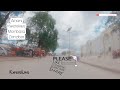
Kumetokea milipuko miwili ya mabomu leo huko Zanzibar, moja likilipuka katika lango la kuingilia kanisa la Anglikani la Mkunazini na bomu lingine kulipuka katika mgahawa maarufu Mercury.

Eneo la tukio la bomu Mkunazini.




.jpeg)


