Wednesday, 21 July 2010

Islanders’ mistaken reverence for Kenya


By Joe Ombuor

To many Zanzibaris of African origin, Kenya produced their most revered liberator from Arab yoke, Field Marshall John Okello.

This is the notion I walked straight into and basked in the high regard that Kenya commands in the archipelago while on a brief trip on the semi autonomous Island recently.

Yet Okello, the ex-policeman who led poorly armed unemployed youth of the defunct Afro Shirazi party in a bloody revolution against the reign of Sultan Jamshi bin Abdulla on the night of January 12, 1964, was an Acholi from Uganda, and not a Kenyan Luo as is widely believed on the Island.

Records at the archives in Zanzibar say the self-styled revolutionary entered Zanzibar from Kenya through the northern Island of Pemba in 1958, claiming to have been a field marshal during Kenya’s Mau Mau uprising.

The Revolution

Older Zanzibaris who spoke to The Standard on Saturday on condition of anonymity said it was Okello, and not first President Sheikh Abeid Amani Karume late father to the current president as is officially claimed, who planned and executed the revolution with the Afro Shirazi Youth League.

Records have it that the young revolutionaries overcame the largely Arab police, taking automatic rifles, submachine and bren guns, with which they swiftly armed themselves to take control of strategic buildings such as the Sultan’s palace and other installations.

Saturday, 17 July 2010

Dr. Shein awasili Zenj


Picha kwa hisani ya Mapara

Wednesday, 14 July 2010

Indian Ocean Sea Levels On The Rise


Newly detected rising sea levels in parts of the Indian Ocean, including the coastlines of the Bay of Bengal, the Arabian Sea, Sri Lanka, Sumatra and Java, appear to be at least partly a result of human-induced increases of atmospheric greenhouse gases, says a study led by the University of Colorado at Boulder.

The study, which combined sea surface measurements going back to the 1960s and satellite observations, indicates anthropogenic climate warming likely is amplifying regional sea rise changes in parts of the Indian Ocean, threatening inhabitants of some coastal areas and islands, said CU-Boulder Associate Professor Weiqing Han, lead study author. The sea level rise -- which may aggravate monsoon flooding in Bangladesh and India -- could have far-reaching impacts on both future regional and global climate.

The key player in the process is the Indo-Pacific warm pool, an enormous, bathtub-shaped area of the tropical oceans stretching from the east coast of Africa west to the International Date Line in the Pacific. The warm pool has heated by about 1 degree Fahrenheit, or 0.5 degrees Celsius, in the past 50 years, primarily caused by human-generated increases of greenhouse gases, said Han.

"Our results from this study imply that if future anthropogenic warming effects in the Indo-Pacific warm pool dominate natural variability, mid-ocean islands such as the Mascarenhas Archipelago, coasts of Indonesia, Sumatra and the north Indian Ocean may experience significantly more sea level rise than the global average," said Han of CU-Boulder's atmospheric and oceanic sciences department.

A paper on the subject was published in this week's issue of Nature Geoscience. Co-authors included Balaji Rajagopalan, Xiao-Wei Quan, Jih-wang Wang and Laurie Trenary of CU-Boulder, Gerald Meehl, John Fasullo, Aixue Hu, William Large and Stephen Yeager of the National Center for Atmospheric Research in Boulder, Jialin Lin of Ohio State University, and Alan Walcraft and Toshiaki Shinoda of the Naval Research Laboratory in Mississippi.

While a number of areas in the Indian Ocean region are showing sea level rise, the study also indicated the Seychelles Islands and Zanzibar off Tanzania's coastline show the largest sea level drop. Global sea level patterns are not geographically uniform, and sea rise in some areas correlate with sea level fall in other areas, said NCAR's Meehl.

The Indian Ocean is the world's third largest ocean and makes up about 20 percent of the water on Earth's surface. The ocean is bounded on the west by East Africa, on the north by India, on the east by Indochina and Australia, and on the south by the Southern Ocean off the coast of Antarctica.

The patterns of sea level change are driven by the combined enhancement of two primary atmospheric wind patterns known as the Hadley circulation and the Walker circulation. The Hadley circulation in the Indian Ocean is dominated by air currents rising above strongly heated tropical waters near the equator and flowing poleward, then sinking to the ocean in the subtropics and causing surface air to flow back toward the equator.

The Indian Ocean's Walker circulation causes air to rise and flow westward at upper levels, sink to the surface and then flow eastward back toward the Indo-Pacific warm pool. "The combined enhancement of the Hadley and Walker circulation form a distinct surface wind pattern that drives specific sea level patterns," said Han.

The international research team used several different sophisticated ocean and climate models for the study, including the Parallel Ocean Program -- the ocean component of NCAR's widely used Community Climate System Model. In addition, the team used a wind-driven, linear ocean model for the study.

"Our new results show that human-caused changes of atmospheric and oceanic circulation over the Indian Ocean region -- which have not been studied previously -- are the major cause for the regional variability of sea level change," wrote the authors in Nature Geoscience.

Han said that based on all-season data records, there is no significant sea level rise around the Maldives. But when the team looked at winter season data only, the Maldives show significant sea level rise, a cause for concern. The smallest Asian country, the Maldives is made up of more than 1,000 islands -- about 200 of which are inhabited by about 300,000 people -- and are on average only about five feet above sea level.

The complex circulation patterns in the Indian Ocean may also affect precipitation by forcing even more atmospheric air down to the surface in Indian Ocean subtropical regions than normal, Han speculated. "This may favor a weakening of atmospheric convection in the subtropics, which may increase rainfall in the eastern tropical regions of the Indian Ocean and increase drought in the western equatorial Indian Ocean region, including east Africa," Han said.

The new study indicates that in order to document sea level change on a global scale, researchers also need to know the specifics of regional sea level changes that will be important for coastal and island regions, said NCAR's Hu. Along the coasts of the northern Indian Ocean, seas have risen by an average of about 0.5 inches, or 13 millimeters, per decade.

"It is important for us to understand the regional changes of the sea level, which will have effects on coastal and island regions," said Hu.

The study was funded by a number of organizations, including NCAR, the National Science Foundation, NASA and the U.S. Department of Energy.


Red Orbit

Friday, 9 July 2010

Je Huu ni Mwisho wa Siasa za Makundi hapo Zenj?


Wapenda muafaka katika mstakabala wa siasa za visiwani, watakuwa wamefarijika sana kwa Dr. Shein kuongoza katika matokeo ya wagombeaji wa urais visiwani Zanzibar. Ingawa hakuwa wazi juu ya muafaka kama mgombea mwingine wa urais huo Ali Karume, kupita kwa jina la Dr. Shein kunafungua ukurasa mpya katika utawala visiwani humo.

Cha msingi hapa ni kujua ni kwa namna gani anaweza kulinda na kusimamia hatua za awali za kuondoa mpasuko wa kijamii visiwani humo. Sifa kubwa ya nje ya Dr. Shein ni kutojulikana msimamo wake, zaidi ni kuwa amehusu kisiwa cha pili, hivyo kuwepo na uwezekano mkubwa kuweza kusimamia maendeleo ya kuwepo na serikali ya mseto.

Tofauti na Dr. Bilal na Waziri Kiongozi, Dr Shein anaonekana kutokuwa na makundi yenye lengo la kuzoretesha jitihada muhimu zilizofikiwa hivi karibuni juu ya utaifa wa Zanzibar. Hii ni silaha yake kubwa na inabidi aitumie vizuri ili kuweza kutibu gonjwa la muda mrefu la siasa za visiwani hapo.

Kwa kuchaguliwa kwake kwa kura nyingi, kunaondoa dhana iliyojengeka miaka mingi juu ya utawala wa ngazi za juu huko Visiwani, ambao ulitokana na mtazamo wa rais wa kwanza wa serikali ya Mapinduzi. Kuchaguliwa kwa Dr. Shein kutaboresha mambo mengi ambayo yalikuwa yanaidhoofisha Zanzibar,na atafanikiwa tu iwapo ataweza kuendesha serikali bila kujali makundi.

Kwa upande mwingine Dr. Bilal amekumbwa na laana ya ubaguzi ambayo ilianza kumwandama mapema baada ya Dr. Salmin kumaliza muda wake wa uongozi. Ukimya wake wa kutoweka msimamo wake wa wazi juu ya siasa za chuki kisiwani hapo, ndio huo ambao umeendelea kumwondoa katika nafasi hiyo ambayo amejaribu kuigombania mara kadhaa bila mafanikio.

Waziri Kiongozi, kwa mtazamo wangu nae tayali alishaanza kujenga makundi katika safari yake ya kuelekea kuchukua urais visiwani humo. Misimamo yake katika masuala yenye kusumbua zaidi visiwa hivyo hakuweza kuyaweka bayana, hivyo kuashiria kusimamia baadhi ya makundi fulani. Ilikuwa ni njia nyepesi kwake kuweza kuchukua nafasi ya urais, kwani ameitumikia nafasi yake kwa miaka kumi hivyo kumwezesha kumrithi rais Karume.

Zanzibar International Film Festival to attract films from 43 countries


STONE TOWN, Tanzania, July (Xinhua) -- The Zanzibar International Film Festival in Tanzania is expected to attract films from 43 countries to the annual event scheduled on July 10 to July 18.

With the theme of "Hopes in Harmony", the film festival provides one opportunity for all Zanzibaris to come and watch films for free on a big screen, and calls for peace and harmony in Zanzibar, the Indian Ocean archipelago.

Opening films includes "I Bring What I Love", which takes the audience behind the scenes and into the world of Africa's most famous musician Youssou N'dour.

Among the special highlights this year's festival is the world Cup final, which would scream the climax of this extraordinary African football extravaganza on late July 11 in the old fort.

Many of the films to be shown at the festival have highlighted every day life of women in the society, according to the press release. It also includes performing arts, which is a street theatre component and it shall work with the literary forum in showcasing the spoken word in an event and it will bring the local repertories to contact with other spoken word performances.

The film festival is seen by the government as a symbol of enhancing Zanzibar culture and acts as a factor of propagating Zanzibar tourism sector, and thus enabling more tourists to visit Zanzibar and boosting Zanzibar economy.

Tuesday, 6 July 2010

Zanzibar artists fight for tourist cash


Tourism is now Zanzibar's biggest industry - easily outstripping the trade in spices, traditionally the Tanzanian island's biggest foreign currency earner.

But local artists complain that they are not able to reap the rewards from the tourist boom.

They say that most of the art on sale is mass produced and has little relevance to the island's culture.

The so-called "tourist art" is ruining their livelihood, they claim.

'Commercial artist'

Saidi Omary, 24, paints up to 15 pieces of "tourist art" a week.

"I am a commercial artist, I paint what is marketable," he said.

"I do create original works but they don't sell quickly which is bad because I need the money."

Despite the thriving tourism industry, the island is still very poor.

The average wage is just 60 US cents a day and it is not surprising that artists are turning out effortless reproductions that they can sell for a few dollars.

Awareness
But some artists working in Zanzibar deplore this commercial approach to art.


Artist Hamza Ausiy is dismissive of "tourist art" and says it is ruining his business.

"For me tourist art is boring and confusing, because if you are an artist, you have a dream and creativity but if you do this sort of work you are always looking for bread," he said.

He says his canvases - which cost $200 or more - are all original artworks and feature exclusively Zanzibari scenes.

Artists selling the original works have now got together to form an association to promote their work.

Musa Ramadhan is secretary of the Zanzibar Young Artists Association.

He says artists should be selling to the local market, even if their volumes are small.

"We need to create awareness among the local people to make them like our art and even hang our works in their homes," Mr Ramadhan said.

He says artists in Zanzibar need to change and create ideas from their culture.

"People on this island like religion we should put religion in our pictures," Mr Ramadhan recommends.

For the time being though, the art market in Zanzibar is driven by the hoards of artists selling mass-produced art.


BBC NEWS


Monday, 5 July 2010

Taste of Zanzibar


For authentic halal east African cuisine, the Taste of Zanzibar is the place to go. The dishes reflect the rich heritage found in this ancient part of Tanzania from the spices to the staples, namely chapatti and rice.


When we walked into this eating experience we had little knowledge of this culture's culinary facets, yet we left with a deeper understanding of the fusion of flavors and components that earmark this cuisine. We felt very comfortable in the casual setting and knew that we were in good hands.

More info visit here

Fegi

Sunday, 27 June 2010

Zanzibar will resonate to Mutoko’s gospel beat


DUBAI-based gospel musician John “Mr Fantastic” Mutoko could be among the few Zimbabwean artists to tour East Africa when he stages shows in Tanzania and Uganda this week.

Mutoko is expected to be in Tanzania on Wednesday ahead of gigs in Zanzibar and Dodoma.

The Zanzibar stop-over will see the musician performing at Mnazi Mmoja Sports Centre on Friday while on Saturday he goes to Old Fort. The only show in Dodoma is slated for Dodoma Stadium on Sunday.

The musician was upbeat about his maiden show in East Africa saying he would work with popular gospel musicians from both countries.

“The exciting thing about my shows in Tanzania is that I will perform alongside Wanguchi Mbogo who is very popular in that country.

“I feel so much honoured to be on stage with such a talented and respected gospel musician,” said Mutoko.

“It is my first time to perform in that country but I have been following Mbogo’s music for sometime and I know we will be able to stitch our performances in an exciting way.

“We have planned to do a duet and I will use the tour as groundwork to that arrangement.

“It is the beginning of a good partnership and I hope we will be able to stage shows together in Zimbabwe.”

In Uganda Mutoko is expected to join gospel musicians from that country that include Kampala-based choir, The Living Sound Gospel Singers, which is led by the popular Steven Ogwang.

The group is well known for its successful international tours that have seen it performing in Europe and the United States over the past two decades.

The Uganda shows are set for Entebbe and Mbarara on July 10 and 11 respectively.
Mutoko said he would use the tour to shoot some videos for his songs since he is putting together a video album titled The Voice of Silence.

“I have been shooting the videos in different parts of the world for the past four months.

“Although the audio album has eight songs, the video album will have 12 including two new releases.

“I will also pick songs from my previous albums but one of the new songs is titled Ngochani Mwana Waani.

“This song takes a swipe at gays. I am surprised that some people who call themselves Christians are openly supporting gays.

“In this song, I make a straight point that it is a sin before God because from the beginning normal marriages and love relationships have been between opposite sexes. I strongly condemn gays.”

Speaking about his annual tours to Zimbabwe, Mutoko said he might not perform back home in the near future claiming that his last shows had been disrupted in unclear circumstances.

“Something unusual happened when I was in Zimbabwe. Some unidentified people came to one of my shows and confronted me.

“They demanded explanations to (the meaning of) some of my songs that include Pasi Idandaro and Mweya Wangu Chizorora.

“The songs attack social ills but I do not target anyone. I feel that anything that corrupts the society should be exposed.

“I am a Christian musician and not a politician. But you know, whenever dry bones are mentioned old people feel uneasy.”

Mutoko says he cut short his last tour because he feared for his life since he was not sure about the motive of the people who disrupted his show.

Tuesday, 22 June 2010

UZINDUZI TAWI LA CCM HELSINKI. MABADILIKO YA UKUMBI NA TAREHE

KUTOKANA NA SABABU NJE YA UWEZO WETU TUMERUDISHA NYUMA SIKU MOJA YAANI ALHAMISI BADALA YA IJUMAA AMBAYO NI SIKUKUU MUHIMU HAPA FINLAND (MID-SUMMER-JUHANNUS) KUTAKUWA NA SHIDA YA USAFIRI. PIA KUTOKANA NA KUPOKEA EMAILS NYINGI ZA WASHIRIKI KAMATI YA MAANDALIZI IMECHUKUA UKUMBI MKUBWA NA WA KISASA PALEPALE KATIKATI YA JIJI LA HELSINKI-RAVINTOLA KAISANIEMI (THE HOME OF AFRICAN NIGHT) KAISANIEMENTIE 6.


TAREHE: ALHAMISI 24.6.2010
MUDA: 18.00pm -23.30pm
BAADA YA MKUTANO: KUTAKUWA NA BURUDANI YA NYIMBO ZA KINYUMBANI TU NA DJ. ALTUNEZ.
KWA WALE WANAOJISIKIA KUJA KUFAHAMIANA NA WATANZANIA WENZAO, TUTAKUWA NA MAZUNGUMZO YA PAMOJA NA BAR KUWA WAZI KWAAJILI YA VINYWAJI BAADA YA MKUTANO 21:00.


NB: WANAWAKAMATI WANAFANYA MAWASILIANO NA BALOZI WETU WA SWEDEN AU MWAKILISHI WAKE ILI AWEZE KUWA MGENI RASMI KWAAJILI YA UFUNGUZI.

Wednesday, 16 June 2010

TANGAZO: Uzinduzi wa Tawi la CCM Helsinki - Finland


Tunayo furaha kubwa kukukaribisha katika mkutano wa kwanza wa tawi la Chama Cha Mapinduzi(C.C.M) nchini Finland.

Dhumuni la mkutano wetu huu wa awali ni kufahamiana katika chama kama wanachama hai wa C.C.M. vilevile kupitia vipengele hivi viwili muhimu.

A) Ufunguzi rasmi wa tawi C.C.M Finland na uandikishaji wa wanachama wapya wa C.C.M.

B) Uchaguzi wa kwanza rasmi wa viongozi (wawikilishi) wa tawi la Chama Cha Mapinduzi Finland.


Uzinduzi Wa Tawi La CCM Helsinki Finland utafanyika siku ya Ijumaa, tarehe: 25-08-2010

ZIFF: Gang drama could fund dream trip for Hornsey arts group


A VIBRANT Hornsey arts club will perform their own play tonight to raise funds to send young people on a volunteering trip to Tanzania.

Kori Arts hopes to take 16 of its young artists to Tanzania on June 27 to work with orphans as part of a special film festival project, but are £5,000 short of their goal.

Using a combination of poetry and theatre, Gang Initiation Clinic tells the story of young men living on housing estates, who turn to gangs for belonging and acceptance but end up destroying their lives.

Kori said it hopes to raise as much as possible from the performance.

Odiri Ighamre, Kori Arts managing director, said: "They are an incredible, inspiring group of young people who are all determined to go. This is a real community effort and we will keep fundraising until the last second."

If successful, the young people will spend a month in the coastal African country, using a variety of art forms to empower the orphans to do their own live performance at Zanzibar International Film Festival.

They will also be thrown out of their comfort zones, as Swahili is the main spoken language.

The trip's aim is to develop a pack for other young people to run similar trips, as well as the benefits the experience will bring for themselves.

Kori also plan to document their adventure by filming and writing.

Group member Anthony Brown, 17, said: "I can't wait to go, I feel so stressed here. I want a new experience teaching children, and them teaching me."

He added: "I want to become a better man. When I come back I can use this experience to be a better person."

Lydia Newman, 22, dramatist and youth worker, was part of the first group of young people to visit Tanzania in 2008.

She said: "I'm really excited to go and work with young people from a different environment. I’m frustrated with the young people over here.

"It’s completely different and it will refresh my energy. It’s going to be amazing."

Even though she has been before, she is confident she will not have the same experience as last time.

Lydia said: "It will give me a greater appreciation for life. The children there are thirsty and are happy to learn.

"I had tears in my eyes when I heard that they were still playing out drama games and that they still remembered them. It just shows that we need to keep inputting."

After the trip the young people will share what they have learnt with their schools, colleges, universities and the wider community.

"This trip will sharpen their leadership skills and will culturally enrich them by learning the politics and history behind Africa," said Ms Ighamre.

To support the young people of Kori Arts, Gang Initiation Clinic will be performed tonight at Moors Cafe, in Crouch End, at 7.30pm.

Tickets cost £10.

For more information, contact Odiri Ighamre on 020 8889 2863.


Source:Haringey Independent

Thursday, 10 June 2010

Lesley Simpson Communications gains new account


Lesley Simpson Communications is proud to announce their recent appointment by Serena Hotels in East Africa to handle their public relations requirements in the South African marketplace.

Covering Kenya, Tanzania, Zanzibar, Mozambique, Uganda and Rwanda, Serena Hotels boast a portfolio of luxury resorts, safari lodges and hotels, blending indigenous culture, design and materials with the highest of international standards of hospitality, care and service. A division of the Aga Khan Fund for Economic Development, they are pioneers of eco-tourism in East Africa, and are committed to protecting its wildlife, communities and fragile habitats.

Tuesday, 8 June 2010

Africa Spirit at the Fez Festival


SUNDAY, JUNE 06, 2010
Sunday at the Fes Festival has been a musical celebration of Africa. The afternoon concert under the oak at the Batha Museum took the audience on a voyage to the spice-filled isle of Zanzibar.

The virtuoso qanoun player, Rajab Suleiman, and his ensemble of bass and percussion played the ngoma rhythms of traditional songs as well as classical Arab pieces. The music had all the elements of Asia, Arabia, Africa and the Indian Ocean that make up the population of the island of Zanzibar. Suleiman is the musical director of the Culture Musical Club in Zanzibar. As a teacher at the Dhow Countries Music Academy he interprets just about anything from jazz to Bach.


Accompanying the trio was the legendary taarab singer, Shakila Saidi (pictured above). Saidi was the doyenne of the famous Black Star Musical Club in Tanga on the coast of Tanzania in the 1970s, and then joined the Taarab Orchestra in the 1980s. Taarab is the musical ecstasy that all Arabic singers strive to achieve. In Zanzibar, with its slave-trade background, the Swahili taarab is a mixture of eastern, Egyptian, Indian and Swahili music and forms the basis of dance rhythms such as the samba and rumba.

This was a languid afternoon of compelling rhythms and music easy to listen to - and hot enough to conjure up vanilla- and clove-scented beaches with swaying palm trees

Saturday, 5 June 2010

Zanzibaris overcome cultural barriers to seek family planning services


More people are turning to family planning in Tanzania's semi-autonomous island of Zanzibar as the government seeks to improve access to reproductive healthcare. Funding, however, remains a challenge.

“We have been moving on well in the recent months as the turn-up for family planning by both men and women is impressive. Acquiring enough contraceptives for our clients remains the biggest challenge,” Hanuni Ibrahim Sogora, the director for family planning in Zanzibar’s Ministry of Health and Social Welfare, told IRIN.

Health officials say a culture of polygamy and low male contraceptive use has limited the number of women accessing reproductive healthcare services.

"The major problem is a lack of male involvement in family planning. For example, if a mother comes to the clinic with her baby, there is no harm if the husband can escort her because whatever information is given is important for both,” Kassim Issa Kirobo of the Zanzibar reproductive health programme, told IRIN. “The men say we are busy looking for a livelihood.”

Kirobo, the programme's behaviour change officer in charge of communication and information, said: "The women may also want to use the [family planning] services but the men have the last word."

Regarding low male contraceptive use, Kirobo said: "People say, why do I need to use a condom with my wife?

“There is a view that condoms are just for STI [sexually transmitted infections] control, not for preventing pregnancies,” he said. “If there was a contraceptive for men, besides condoms, maybe that would work.”

Shortages

However, in the past three years, there has been a positive uptake of the services, according to Sogora.

"The number of women and men going for family planning has been growing. We now frequently have implants and Depo-Provera out of stock because of the growing demand,” she said.

Implants are tiny rods containing hormones that are inserted under the skin to prevent pregnancy. Depo-Provera is a form of birth control whereby a synthetic form of the hormone progesterone is injected every three months.

Sogora said over-reliance on donor funding was a problem, with the government only providing a small amount of funds.

Population growth

The population growth rate on the islands is 3.1 percent, says the chief government statistician, with 1.2 million people in 2008 from 981,750 in 2002, according to a demographic survey citing Zanzibar's 2002 census. Immigration is also a factor.

Mzee K. Juma of the municipal council said the average household size in the Zanzibar municipality was 5.6 persons, with the population growth rate higher there at 4.5 percent.

Modern contraceptive use in Tanzania increased from 17 percent in 1999 to 20 percent in 2004-2005 among married women. Unmet family planning needs remain, however, especially in rural areas.

Attitude change

Across Zanzibar, health officials are involved in awareness-raising to enhance the use of reproductive health services and religious leaders are being trained to reach the men.

Some men are changing their attitude. Ahmed Mussa, 41, said: “Previously, I was anti-family planning, but last year [2009] I accepted the idea after having four children in a short period of six years.

“[When] my wife decided to go for family planning, I supported her and [I ] think we can now decide to either remain with the four children or have two more with the required gaps."

Sabah Salum, a mother of two, said: “I think it is good to help mothers plan their family. It is tiresome to have children almost every year.”

Islam is the main religion in Zanzibar.

Issa Zidy, an Islamic scholar and lecturer at the State University of Zanzibar, said: "Islam encourages family planning because it promotes having another baby after two to three years."

But even for those who plan their families, challenges remain.

According to 2009 health estimates, the maternal mortality rate in Zanzibar was 377 per 100,000 live births. The deaths were mainly due to severe bleeding and eclampsia, exacerbated by inadequately skilled attendants and lack of facilities in primary healthcare units.

Challenges

Kirobo noted that rural primary healthcare centres often lacked comprehensive delivery facilities, with women needing caesarian services being transferred to towns.

Delivery costs are a barrier. "People say if I go to the TBA [traditional birth attendant] I do not have to pay anything," Kirobo said.

He said the government was training TBAs and providing life-saving skills to maternity ward attendants.

Asha Aboud Mzee, secretary of the Catalyst Organization for Women’s Progress in Zanzibar, said other challenges facing women included HIV/AIDS, domestic violence and poor representation in decision-making.

"Sometimes at the Shehia [lowest administration] level, we find few of the committee members are women; there is no one to talk about women’s and children’s issues."

Zanzibar recently passed a law seeking to increase female representation in parliament.

"We don’t just want numbers; we want to send [women] to parliament who will actually represent us. [They] should understand women’s problems, not just sit [in parliament] and listen. Women have many needs,” Mzee said.

Friday, 4 June 2010

Chwaka Bay


Chwaka Bay is a large indentation in the central east coast of the Tanzanian island of Unguja - the largest island of the Zanzibar Archipelago. The bay contains several small islands, and the towns of Chwaka and Kae are situated on its coast. The southwest corner of the bay forms part of the Jozani-Chwaka Bay National Park

Source: Trek Earth.

Sunday, 23 May 2010

Zanzibar president backs unity government


The President of Tanzania's semi-autonomous Zanzibar islands backed a power-sharing deal with the opposition to end years of political turmoil.

"We cannot continue in crisis because we have gained nothing out of it in the past years," Amani Karume said on Thursday as he opened a renovated stadium.

"Britain recently had elections and had to form a coalition government. We must also learn from others to have smooth and stable democracy," added Amani of the ruling Chama Cha Mapinduzi (CCM - Revolutionary Party).

Zanzibar -- made up of Unguja and Pemba isles -- united with mainland Tanganyika in 1964 to form Tanzania.

It has been dogged by political crises ever since and these worsened with the restoration of multi-party politics in 1992.

Election disputes between CCM and the main opposition group, Civic United Front (CUF), have often resulted in bloody violence.

Last year Karume and CUF leader Seif Sharif Hamad opened talks to resolve the crisis and have agreed to hold a referendum on power-sharing on July 31.

Under the agreement, Zanzibar will have a president and two vice-presidents: A first deputy president from the party which comes second in the polls and the second from the winning party.

Ministries will be allocated on a proportional basis.

Tanzania is to hold general elections on October 31.

Geographically, Zanzibar archipelago comprises three isles, but the third, Mafia, falls under the mainland administratively.

The Indian Ocean archipelago, with palm-fringed beaches and historic sites, is a famous travel destination and tourism is its mainstay.


Source: LIVE

Thursday, 20 May 2010

The Westminster model failed Africa


When Britain granted independence to the majority of its African colonies in the 1950s and 1960s, it attempted to hand down Westminster's parliamentary system as an institutional legacy. Today, the Westminster model in most of these colonies has all but disappeared. As Britain haggles over the prospect of reforms to its political system, there is room for dialogue with former African colonies about how to improve government models.

One of Britain's justifications for colonialism in Africa was that it sought to "civilise the natives" by preparing them for democratic government based on the Westminster model. At independence Ghana, Somalia, Cameroon, Sierra Leone, Tanzania, Uganda, Kenya, Zanzibar, Zambia, Malawi, Gambia, Lesotho, Botswana, Swaziland and Zimbabwe had as one of their institutional legacies this model.

However, institutionalising our parliamentary system among the "natives" had not been a dominant pursuit throughout colonialism. British colonial government had been undemocratic. As Barry Munslow writes, "from 1910 to 1948 Sir Roger Furse controlled all applications to civil service posts. He went to Eton and Balliol College (Oxford) but confessed that he owed his success more to his training as a cavalry officer. After the first world war, new recruits to the colonial service tended to be ex-officers and later were drawn from the public schools and Oxbridge. The result was that the ethos of a ruling class, that in Britain was fast losing its exclusive claim, became the ethos of the colonial service".

The Westminster model was, with the exception of Ghana, belatedly transplanted during rapid decolonisation processes in Africa. Britain did not consider that it could not be handed down to African colonies regardless of historical, cultural and education contexts. Transplanting the Westminster model also meant that there was no real ownership of the system in African colonies. There was no emphasis on the necessity of having a significant transition period during which it might have taken root in Africa.

In view of this, it is unsurprising that the imported political system collapsed in the vast majority of former British colonies in Africa. Single-party rule and military coup d'états became the norm. The blame was often directed at the Africans. The British model was not the problem: Africans were not ready for democracy. It is, however, more accurate to say that the system of the colonisers was unworkable in many former African colonies for the reasons outlined above. And despite ongoing problems, parts of Africa have democratised considerably since decolonisation.

Most former British colonies in Africa now have presidential systems of government. The presidential system has its merits: presidents are elected directly by the people and it offers stable and decisive government. Nonetheless, concentration of excessive powers in the presidency has caused dictatorship, and is a hindrance to leadership change. Democracy activists have worked hard for the introduction of presidential term limits. They continue to work towards the reduction of presidential powers.

When Britain promotes government models in Africa, it is prone to assuming that its system is better. This is not to say African systems are of a higher standard. However, the flawed nature of the British political system, which became most evident in the 2010 elections, behoves us to be less paternalistic. It is fitting that we seek dialogue on political system reforms – as equals – with former African colonies. There is much we may learn from their experiences, just as they can learn from the British system's current problems.

Source:Guardian

Sunday, 16 May 2010

Zanzibar to vote on power-sharing government


Stone Town, Zanzibar - The semi-autonomous African archipelago of Zanzibar will hold a July vote on whether to change its constitution to allow rival parties to form coalition governments, after a decade of bitter party politics.

The July 31 ballot is aimed at ending recurring bouts of political violence that have marred elections since the ruling Chama Cha Mapinduzi (CCM) party won a fiercely disputed poll in 2000. Reconciliation talks have faltered several times.

But a gradual rapprochement between the CCM and its once bitter rival, the opposition Civic United Front (CUF), late last year has led to talk from both about a cross-party government.

The constitution of Zanzibar, an island group in the Indian Ocean off Africa's east coast that is a semi-autonomous part of Tanzania, has no provisions for a power-sharing agreement and would have to be changed to allow a cross-party government.

"The electoral commission will take a leading role in reaching out to voters for this new concept to be understood," Khatib Mwinyichande, chairman of the Zanzibar Electoral Commission, told reporters.

Polls on the palm-fringed islands off Tanzania were tainted by bloodshed and allegations of vote rigging in 2000 and 2005, and three sets of reconciliation talks between the two main political parties had previously stalled.

Tanzanian President Jakaya Kikwete has described the archipelago as the "Achilles' heel" of the otherwise peaceful country of 40 million people.

If the referendum is passed then the constitution would be amended in time for October's presidential and parliamentary votes in both Zanzibar and Tanzania.

The leaders of both the CCM and CUF have urged their supporters to vote 'yes' in the referendum although a right wing section of the ruling party is spearheading a 'no' campaign.

Voter registration on Zanzibar ended earlier this month.

During the process the ZEC reported clear cases of fraud with voters registering two or three times in different places. The opposition has claimed thousands of its members were unable to register.

Saturday, 15 May 2010

Zanzibar: East Africa's island outpost....


Zanzibar, with its dreamy capital and dazzling coast, is the place to head for a few days on the beach after a safari. Thembi Mutch explores the archipelago.

Myself, I would like to study archaeology," says the immigration official ruefully, casting an eye over my unopened suitcase. "Go through. I won't look at your stuff. Enjoy Zanzibar. Welcome!"

In no other arrivals section of an airport in the world have I experienced such friendliness as in Zanzibar.

"The past is never dead, it's not even past," says the sign hanging above the Zanzibar National Archives. Never a truer word, in the case of Zanzibar; the place is heavy with history. It was the home of Tippu Tib – the 19th-century trader, slaver and clove plantation owner – and, legendarily, of Scheherazade. Rimbaud wandered the souk streets of Zanzibar's capital, Stone Town, looking for inspiration. The explorers Livingstone, Speke and Burton all used Zanzibar as a springboard for their travels.

"Earth, sea and sky, all seem wrapped in a soft and sensuous repose," wrote Burton. "We distinctly felt a heavy spicy perfume and the sensorium was not the less pleasantly affected after a hard briny diet of NE trade."

These days, flights arrive daily from all over Europe. However, Stone Town is best viewed from the new Chinese speedboat from mainland Tanzania, 22 miles away. A two-hour ride from the dusty fury of Dar es Salaam, its skyline is dominated by the grand colonial architecture of The House of Wonders museum: the old British Customs and Immigration and, at four storeys high, the tallest building on the islands. Suddenly, you are in the land of bullock carts, sharks atop bicycles, and sugar-cane vendors squeezing out juice on mangles. It is a country where hustlers, beach boys and women with heavily kohl'd eyes peering from behind burkhas remind one that behind the ubiquitous visual beauty of the island (albeit marred by some of the more hideous new hotels) is a fusion of Arab, African, Indian, Shirazi and colonial.

Zanzibar simultaneously silences and thrives on its chequered past. It is many things, all quirky smoke and mirrors: not a single island, as many imagine, but an archipelago of dozens off the east coast of Africa; part of Tanzania, yet autonomous; a land constantly squabbled over by missionaries, abolitionists, unscrupulous traders, local leaders and invaders; a UNESCO World Heritage site yet a haphazardly growing tourist destination.

The architecture is an obvious draw. Huge, brass-studded, crafted mahogany doors in the capital – the exotic equivalent of Persian merchant bling – are evidence of the 17th- and 18th-century boom when Bohran Shi'a traders from Persia and the Arab states thrived on the trade in cloves, coconuts, slavery and piracy. These days, hoteliers, telecom companies, investors, wannabes, misfits and smart tourists alike are waking up to the potential of such bounty.

Zanzibar is not yet wholly established as a holiday spot. Despite the 87 new hotel licences issued for 2010, and the industry's chaotic growth in the past 15 years (from two or three hotels in 1993 to 150 in 2005 and almost 300 now), most development has taken place around the 60-mile by 20-mile Zanzibar Island. It is still possible, though, to find genuine isolation in the remote outlying islands of Mafia and Pemba. Now is the time to go, to see it all before big hotels and resorts change the place drastically – which they will if, as expected, they follow the lead of the Maldives and the Seychelles.

Dhows, jihazis and ngalawas (all boats made from mango or mahogany wood), modelled on the same design as their ancient Indian and Arabian predecessors, bob in the surrounding waters. The sea is still Zanzibar's main resource. Fishermen scooping up octopus, changu, tuna, dorado, kingfish and barracuda can be seen at Malindi, a 400-year-old fish market reminiscent of Shakespearean Britain, all yells and sewage. Near Khazini are the boat builders. Stripped to the waist, still working with hand-driven drills, chisels and rustic mallets, they practise the same techniques as their forefathers.

Frustratingly, though, it can be difficult to access decent background information about the history of Zanzibar. The bloody but fascinating revolution of 1964, for instance, led by a vision-fuelled drifter, John Okello, is covered by the guides of only one local travel company: Serene Tours. Yes, it was a horrific stain on history, with the Sultan overthrown and killed; but the reshuffling of the Arab, Indian and African hierarchies – the hand of the British Empire yet again, endlessly stratifying different races and according them different economic and voting privileges – gives many clues to the current political and social issues surrounding Zanzibar. For example, the elaborate kangas (pieces of printed material) and colourful kanzus (Arab dresses) worn by Zanzibar's African women are a direct throwback to slavery.

Previously, Africans were allowed to buy only "merikani" (white sailcloth, made from the kind of American cotton used for sails, hence the Swahilisation of the name). After the decline of the slave trade, then the revolution, wearing flamboyant clothes became a sign of both wealth and freedom. Indeed, in the 1940s, Zanzibar was known as "the metropolis of East Africa".

Slavery and piracy are generally hushed over by those who live here, like a rheumatic crazy aunt living in the attic. One of the few people who does talk knowledgeably about these and other elements of Zanzibar's cultural history is historian and guide Farid Hamid, the son of a respected iman on the island.

"We welcome tourists both for the revenue they generate and the interchange of ideas," he says. "We do, however, need actively to preserve and maintain our culture – both the buildings and the musical and oral elements."

Slavery, however, is not commodified here in the same way as it is in, say, Senegal or Ghana. Zanzibar has the uncomfortable honour of having actively ignored the abolition edict of 1873, despite Livingstone haranguing the British government and the Omani rulers, who profited enormously from Zanzibar's geographic position and the isolation and inefficiency of the British Protectorate. The Mangapwani Slave Caves, the Anglican cathedral and the slave market of Stone Town saw huge numbers of slaves: captured both by local African leaders delivering enemies from battle, and by Arab traders.

Farid takes me on a tour. There isn't much he doesn't know about mgangas (witch doctors), shitanis (evil spirits) and the role of Scheherazade and Taraab (the local music). He is a trove of (sometimes hastily gabbled) knowledge. According to him, most of the mosques on the island (allegedly 57 in Stone Town alone) were built by women. With disarming, guileless enthusiasm he tells me about kidumbak and kongwes: the strictly all-women dances taught to young brides before marriage, and the mentors in all things sexual for these girls. As we pass Forodhani gardens' food market at night – bristling with Zanzibaris flaunting and flirting – he tells me that for a short while, when ruled by the British, Zanzibar was the home of rather febrile British civil servants, all keen to leave their peculiar mark. They spent much time cataloguing people obsessively, "educating" local women by discouraging breastfeeding, and producing intricate, dull films about mosquitoes. The Anglo-Zanzibar war of 1896 – the shortest in history, lasting all of 38 minutes – was perhaps a continuation of this daft behaviour. Today the only reminders are the cannon sitting sedately outside the House of Wonders. Inside is a small exhibit about the role of dhows in Zanzibar history. Sadly, but not unexpect-edly, the fabled lift – the first in Africa! – no longer works.

There is, however, no dearth of information about the marine and biological life of Zanzibar Island, Pemba and Mafia. There are tracts of tropical forest such as Jozani on Zanzibar, with its red colobus monkeys, and three marine parks. The underwater ecosystem of the Indian Ocean is unique, and despite various issues (fish dynamiting, overfishing, damage by trawl nets and a chaotic sewage disposal system), the marine parks around Mafia and Pemba in particular are spectacular: genuine tropical finds. They are also well off the beaten track, with the result that only a handful of tourists visit each year.

For the effort of getting there, visitors are rewarded with local people who stop to practise English, or to offer you local tea, brewed with cinnamon, cloves and ginger. There are knowledgeable local guides and dive masters. And it is on these remote islands that you can really get away from it all. Most of the best white-sand beaches in the archipelago are on the east coast of Zanzibar Island (the west-coast beaches are gold rather than white) – but Manta Resort in Pemba, for instance, provides Bounty-ad beaches, butlers, delicious food and world-class diving.

On smaller Mafia, where Ann and Jean De Villiers of Chole Mjini Lodge run the Whale Shark Conservation Society, the abundant coral and huge diversity of fish, turtles, stingrays and manta rays testify to the success of its marine park – and to the determination of Australian Greg Edwards, who stopped dynamite fishing in the area.
Since the De Villiers began in 1993, they have built up a genuine eco-lodge project, supporting a feudally poor local community as well as offering tree-house guest rooms in 2,000-year-old baobabs. The beach is nothing special, but the lodge – its properties dotted among the ruins of remnants of German, British and Omani occupation – is a delight for birdwatchers, historians, marine ecologists, scuba divers and snorkellers. Indeed, it is perfect for anyone just wanting to be close to village life, away from the hassle of the Zanzibar mainland. The past is, indeed, never dead.


Source: Telegraph

Prison Island....


Mapenzi...

Friday, 14 May 2010

Terror Charge Upheld Despite ‘Torture’ Claims.....


Anti-anti-terrorists don’t much care what happens to al-Qaeda so long as we’re treated to the “reckoning” against Bush-administration officials promised by Eric Holder during the 2008 Obama campaign. These deranged souls have just suffered a black Monday. That was when Manhattan federal judge Lewis Kaplan ruled that allegations of torture were no reason to dismiss the case against a jihadist accused of conspiring to bomb the United States embassies in Kenya and Tanzania.

Those simultaneous attacks in August 1998 killed at least 224 people, most of them Muslims. Afterwards, Ahmed Khalfan Ghailani, then a 23-year-old from Zanzibar, bounced around al-Qaeda’s havens until 2004, when he was finally captured in Pakistan after a fierce firefight. He was then turned over to the CIA. Deemed a high-value detainee, he was interrogated by the agency at one or more of its “black site” prisons outside the U.S. During this period, Ghailani alleges, he was subjected to what the CIA has called “enhanced interrogation techniques” and what he calls “torture.” Subsequently, he was detained at the Guantanamo Bay naval base until last June, when the Obama administration opted to transfer him for a civilian trial in New York City.

Unlike the similar effort — now stalled — to try Khalid Sheikh Mohammed and four other 9/11 plotters in the same courthouse, Ghailani’s transfer caused nary a whimper. That was understandable. There was no military-commission system when the embassies were savaged. That is not a legal bar to trying pre-9/11 war crimes by commission; indeed, the Obama administration has consigned the bombers of the USS Cole to a commission trial, even though their attack occurred nearly a year before 9/11. There was, however, a second consideration in Ghailani’s case: The embassy bombings have already been the subject of a lengthy civilian trial, during which one terrorist pleaded guilty and four others were convicted. The Justice Department could plausibly argue that its case could be proved by relying, in the main, on evidence that has already been publicly disclosed. Thus, the classified-information-disclosure issues that beset post-9/11 prosecutions would not be as dicey.

Or would they? Ghailani fully intended to move them front and center. He made a pretrial motion to dismiss the case based on outrageous government misconduct. This claim, rooted in the oxymoronic doctrine of “substantive due process,” was drummed up by the Supreme Court in the 1952 case of Rochin v. California, in which police subjected a suspect to harrowing physical abuse, forcing him to emit the illegal narcotics that the state then used to prosecute him. The drastic remedy of dismissing an indictment is available only when there has been truly egregious misconduct that “shocks the conscience.” That amorphous standard is situational: Aggressive tactics that are shocking in some circumstances (like ordinary, peacetime law enforcement) may be justifiable in others (like wartime intelligence-gathering against mass murderers).

So, does the court’s rejection of Ghailani’s motion mean the judiciary has stamped its seal of approval on harsh interrogation? Not at all. In fact, the government declined to respond to the terrorist’s claims of abuse and took no position on whether, if true, those claims amount to a due-process violation. The court made no ruling on whether there had been torture.

The government instead contended that there was a critical element missing from Ghailani’s motion: causation. If the alleged torture didn’t have anything to do with the case — if the claimed abuse played no role in Ghailani’s being captured and brought into the court’s jurisdiction, if its fruits formed no part of the evidence against him — then, prosecutors argued, it is irrelevant for purposes of the criminal trial.

Carefully construing the precedents on this point, Judge Kaplan agreed. He stressed that the government had committed not to use anything Ghailani told the CIA against him. Thus, he reasoned, “any deprivation of liberty that Ghailani might suffer as a result of a conviction in this case would be entirely unconnected to the alleged due process violation. Even if Ghailani was mistreated while in CIA custody and even if that mistreatment violated the Due Process Clause, there would be no connection between such mistreatment and this prosecution.”

Ni Usafi ama Uchafu? - Mji Mkongwe

Tuesday, 11 May 2010

Wageni wa ajabu! FFU walipotua Mjini Munich na muziki wao!


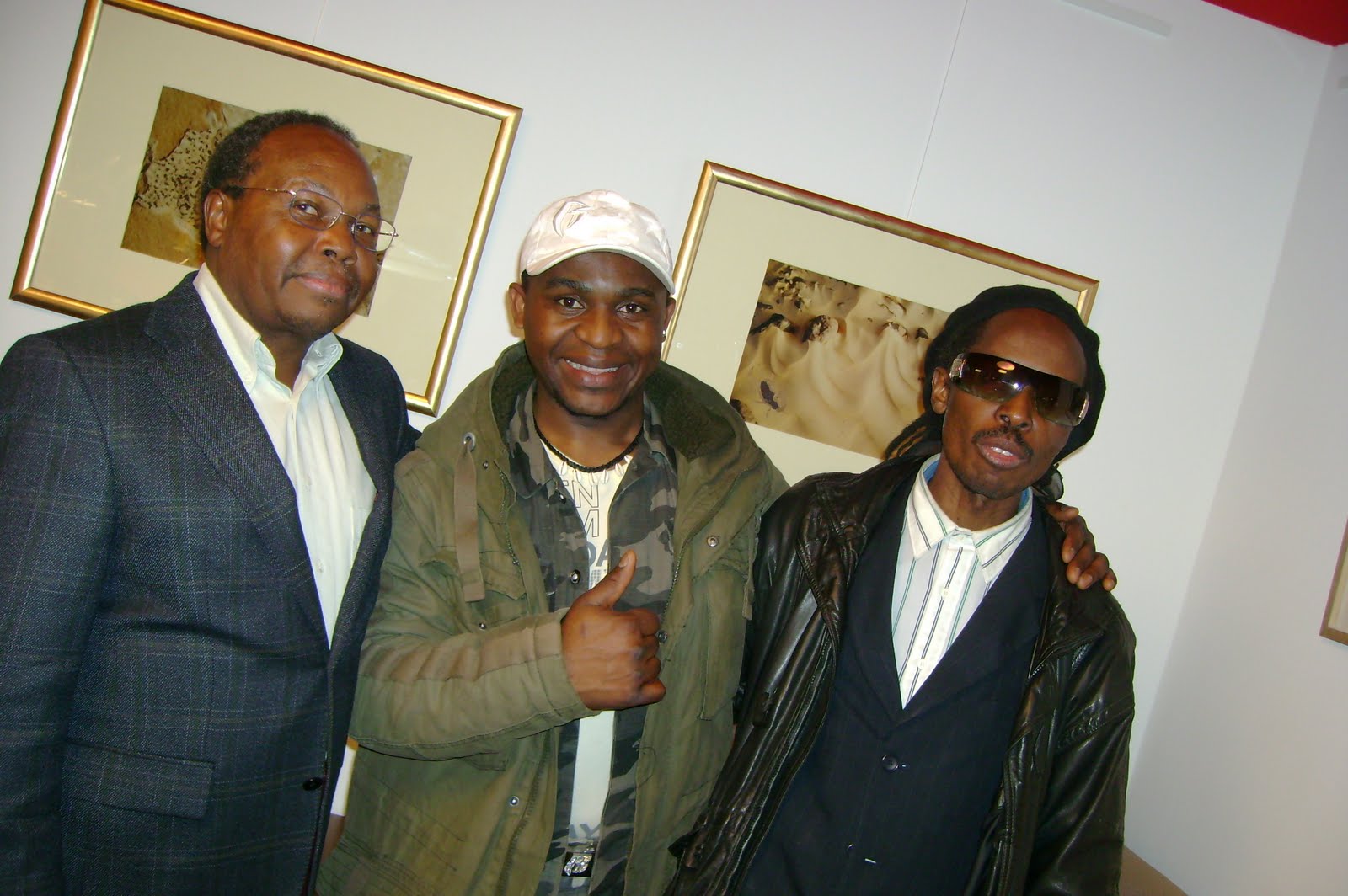
Pichani, Mwenye Miwani Ras makunja kamanda wa Ngoma Africa band aka FFU katikati mwenye kofia nyeupe Afande Chris-B(Mshambuliaji wa solo) wa FFU pembeni ni MR.Reginald Temu mwenyekiti wa chama cha urafiki kati ya wajerumani na watanzania,akiwakaraibisha mjini Munich wageni wa ajabu! FFU wa Ngoma Africa ambao hawana huruma hata kiduchu washambuliapo jukwaani.

Bendi hiyo ya Ngoma Africa ilifanikiwa kuwatia kiwewe washabiki mjini munich usiku
wa 8-05-katika shamra shamra za kusherekea kombe la soka la dunia Afrika Kusini 2010.
Sherehe hizo ziliudhuriwa na wengi na wageni wa heshima, ambao walikuwa ni manaibu mabalozi wa Tanzania na Afrika Kusini nchini Ujerumani. Naibu Balozi wa Tanzania yuko Ujeruamani Mhe.Bw.Ali Siwa na Naibu Balozi wa Afrika Kusini nchini humo Mr.Martin Ngudze.

UN Official’s Visit to Tanzania Focuses on Development And Conservation


New York, May 10 2010 6:10PM The head of the United Nations Development Programme (UNDP) today met with Tanzania’s finance minister to discuss the country’s progress towards achieving the social development and poverty alleviation targets known as Millennium Development Goals (MDGs).

Discussions between UNDP Administrator Helen Clark and Mustafa Mkulo focused particularly on efforts to halt the spread of HIV/AIDS, empowering women, and enrolling more children in primary school.

They also touched on the “Delivering as One” initiative – a programme under which countries work closely with UN entities to facilitate development – which they said had made a significant contribution to Tanzania’s anti-poverty strategy.

On Sunday, Miss Clark visited Tanzania’s semi-autonomous island of Zanzibar, where she had a meeting with President Amani Abeid Karume. She also visited the Jozani-Chwaka Bay Conservation Area, the single most important site for the conservation of Zanzibar’s biodiversity. UNDP supported the creation of the park and helped the Government put in place policies and legislative processes that made conservation possible.

The conservation zone consists of a protected core area of 34 square kilometres and a buffer zone of 48 square kilometres. It is a shallow open bay that supports the largest block of mangrove forest on Zanzibar and a wintering population of crab plovers, a bird species unique in making use of ground warmth to incubate its eggs.

It is also home to other unique species of birds, plants, invertebrates and mammals, including the red colobus monkey and the Ader’s Duiker antelope, as well as the Zanzibar leopard, which may have disappeared as it has not been seen for two years.

The area is a growing tourist attraction. The Jozani forest welcomes 20,000 visitors per year, more than 17 per cent of the total foreign tourists who visit Zanzibar. UNDP supported the local authorities in creating the national park, which protects the Jozani forest.


On arrival in Tanzania for the four-day visit on Saturday, Miss Clark had a meeting with Tanzania’s foreign minister Bernard Membe, during which they discussed UNDP’s support of the electoral process, including help on voter registration and civic education in the run-up to national elections in October.

On Tuesday, Miss Clark will visit the National Electoral Commission and meet recently-registered voters who will vote for the first time this year.

Miss Clark’s mission to four Africa countries has already taken her to Mali and Burkina Faso, and will also include a visit to South Africa.

Hijab...

Monday, 10 May 2010

Pemba imeanza kujaribu umeme toka Tanga


Huduma ya umeme mpya wa grid ya taifa kutoka Tanga hadi Pemba umewashwa leo kwa majaribio kiswani humo na kwa mafanio mafaniko.

Akizungumza katika zoezi hilo Naibu waziri wa maji ujenzi nishati na ardhi Tafana Kassim Mzee amesema umeme huo kisiwani Pemba umeanza kuwashwa majira ya saa tano Asubuhi.(Jana Jumapili)

Bw.Mzee amesema majaribio hayo yatachukua muda wa wiki mbili na umeme huo unatarajiwa kuwashwa rasmi Tarehe 2 June ambapo rais wa Zanzibar na mwenyekiti wa bara za la mapainduzi Dr.Amani Abeid Karume anatarajiwa kuuzindua rasmi huduma hiyo…
Akizungumza na zenji Fm Radio Miongoni mwa mafundi waliokuwa wakifanikisha kazi hiyo kutoka shirika la umeme Tanzania Tanesco amesema umeme huo ulitarajiwa kuwashwa saa 12 Asubuhi na umechelewa kutokana na kutokea hitilafu katika baadhi ya viungo vya waya wa umeme huo……

Kisiwa cha Pemba kwa muda mrefu hakina huduma ya umeme wa uhakika kutokana na vinu vya kuzalisha umeme kuwa vibovu.

Kuwepo kwa huduma hiyo ya grid ya taifa kutoka Tanga kutachochea maendeleo ya kisiwa hicho hasa katika uwekezaji wa sekta ya utalii na kukuza maendeleo ya kiuchumi kwa wanachi wake.

Source: ZenjFM

Saturday, 8 May 2010

Mkapa's Position on Zanzibar Unity Vote


Referendum planned for Zanzibar later this year, should be given a chance as it might prove to be a solution to perennial instability that has haunted the Indian Ocean archipelago for years, former President Benjamin Mkapa said yesterday.

He said for a long time Zanzibar has been embracing the winner takes all policy, but the system has resulted into political instability.

He said it was encouraging that Zanzibar leaders have agreed to try the other model and they should not only be supported, but also be given a chance as the agreed system might prove to be useful in stabilising the Isles.

"And the good thing is that they have agreed to put the option through the people... let us give the referendum a chance," he said.

Retired President Mkapa made the remarks when reacting to a question during a press conference he jointly addressed with two other commissioners for Blair Commission for Africa, which has been re-launched to review progress of recommendations contained in a report that the team published five years ago.

He was asked on his comments over whether the tendency of establishing coalition governments was setting a bad precedent for Africa's governance.

He was referring to recent development in the Zanzibar political arena where two political rivals, Chama Cha Mapinduzi and the opposition Civic United Front have agreed to transform a political system and include in the Zanzibar Constitution an option for a coalition government as an answer to political misunderstandings.

The changes were triggered by the surprise meeting between Zanzibar President, Mr Amani Abeid Karume and his long time political rival, Mr Seif Shariff Hamad at the Zanzibar State House in November last year.

The meeting was followed by public pronouncements by both leaders that they have found a lasting solution to Zanzibar's political problems.

Later a private motion was tabled in the House of Representatives by the leader of official Opposition in the House, Mr Abubakary Khamis (CUF), seeking the changing the constitution through a referendum so that coalition government could be formed in Zanzibar.

The private motion was anonymously endorsed by the House culminating into drafting of a bill on referendum which has already been passed and signed by the President.

Preparations were now underway for the organisation of the referendum before the October General Election.

Mr Mkapa said since the winner takes all system has not worked well, there was a need to give the agreed system a chance to see if it would help solve problems.

On the trend of setting coalition governments in Africa, Mr Mkapa said all depends on prevailing situations.

Giving an example of Kenya, where he was involved in negotiations after the 2007/08 post polls violence, he said the situation necessitated the formation of such a government.

Chipping in, another commissioner who addressed the press conference, Ms Anna Tibaijuka, the UN-Habitat chief, said democratic institutions in Africa were to blame for such developments.

She said failure by democratic institutions to determine a winner after elections, ushered in all sorts of political problems.

"We have copied western democracies and in many instances we lack constitutional legitimacy on what to do especially when the institutions fail to determine and name the winner after elections," she said.

For his party, Ethiopia Prime Minister Meles Zenawi, who also sits in the commission, said he was not comfortable for any kind of democratic recipes "every case should be judged on its own merit."

He said coalition governments could be part of the solution in some instances, but that does not mean that it should be applied in every case.

Meanwhile, Mr Mkapa reiterated yesterday that aid was another major factor which impedes Africa's development.

Reacting to question on why Africa was still poor despite its abundant natural resources, he said: "Most of us think that it is other people's responsibility to develop our continent."

He said it was dejecting that more than 50 years since most of African countries attained independence, they have continued to looking for aid as a way of emancipation.
"We chased away colonialists knowing that they will not give us independence. How come then that now we are returning to hem asking for aid?" he posed, adding: "We need to accept that change is our responsibility. Extraordinary dependence is not only a shock, it is disgraceful...we should get on our feet and think for ourselves."

According to former British ambassador to Ethiopia, Mr Myles Wickstead, the commission had been revived to assess progress made in the implementation of the recommendations contained in its report.

"We think that five years after the recommendations were made and five years before the millennium development goals target time, it is appropriate that we review progress made," he said.

Thursday, 6 May 2010

1,000 Words About Tanzania


A Funny Thing Happened on the Way to Kigoma, Tanzania

We arrived in Dar es Salaam, Tanzania excited to catch a flight to Kigoma, a region in the northwestern part of the country to visit a Jane Goodall Institute Tanzania project working with small farmers to promote sustainable agriculture. Unfortunately Precision Air, one of only two airlines that flies to the remote region, has suspended all flights for the next several weeks and the other airline is all booked.

No worries, we headed to Zanzibar instead....

Zanzibar is a place known for beautiful beaches, but the thing that I liked most about my visit there was the food. Everywhere you look there's a bounty of fresh vegetables, fruit, and, most importantly given the island's history, spices. Zanzibar is one of the "Spice Islands," a group of islands that supplied cloves, coriander, nutmeg, pepper, vanilla, and other spices to Europe in the 17th Century.

Today, those spices are grown much the same way they were then-organically, without the use of chemical pesticides and artificial fertilizers, in response to consumer demand. And they're still grown on large plantations, but instead of slaves planting and harvesting the crops, local Tanzanian farmers use intercropping to grow many of the spices along with fruit trees and vegetables. The spice farms are also benefiting from tourism-I paid a shockingly low $12 for my day long trip to the spice farm, which included a wonderful (and spicy!) vegetarian lunch and a trip to a pristine and deserted beach.


The Tanzanian government, however, controls much of the land where the spices are grown and also where they are sold. Vanilla grown in Zanzibar, for example, is not used on the island or even in mainland Tanzania, but is grown exclusively for export. And Zanzibar is also the world's third largest supplier of cloves, the main export from the island.

When we arrived back to Dar Es Salaam we did have the opportunity to meet with Pancras Ngalason who is the Executive Director of Jane Goodall Center (JGI) in Tanzania and he explained how the Institute has evolved since it began in the 1970s. They've gone, according to Ngalason, beyond research to address questions of livelihood.

JGI started as a center to research and protect wild chimpanzee populations in what is now, thanks to their efforts, Gombe National Park. But in the early 1990s JGI realized that if it didn't start addressing the needs of the communities surrounding the park, their efforts to conserve wildlife wouldn't work. JGI first started by planting trees in the region, but soon found that communities cut them down, not because they wanted to, but because they needed them for fuel and for making charcoal. It was at that time, says Ngalason, that we "thought beyond planting trees" and more about community-based conservation.

JGI started working with communities to develop government- mandated land use plans, helping them develop soil erosion prevention practices, agroforestry, and production of value-added products, such as coffee and palm oil. They like to say that their products are "Good for All"-good for farmers by providing income, good for the environment by protecting natural resources, and good for the consumer by providing a healthy product.

They're also working training community health practitioners about reproductive health and HIV/AIDS prevention, educating youth, establishing micro-credit programs, and working with UNICEF and USAID to supply clean water to communities.

We then hopped on a bus to Arusha, Tanzania to meet with the World Vegetable Center...

As hunger and drought spread across Africa , there's a huge focus on increasing yields of staple crops, such as maize, wheat, cassava, and rice. And while these crops are important for food security, providing much needed calories, they don't provide much protein, Vitamin A, Vitamin C, calcium, iron, riboflavin, thiamin, niacin, other important vitamins and micronutrients-or much taste. "None of the staple crops," says Dr. Abdou Tenkouano, the World Vegetable Center's Regional Director for Africa, "would be palatable without vegetables." And vegetables, he says, "are less risk prone" than staple crops that stay in the field for longer periods of time.

Because vegetables typically have a shorter growing time, they can maximize often scarce water supplies and soil nutrients better than crops such as maize which need a lot of water and fertilizer.

Unfortunately no country in Africa, according to Dr. Tenkouano, has a big focus on vegetable production. But that's where the Center steps in. Since the 1990s, the Center (which is a part of the Asian Vegetable Research and Development Center based in Taiwan) has been working in Africa to breed cultivars that best suit farmers' needs.

Despite the focus on staple crops, vegetable production generates more income on and off the farm than most other agricultural enterprises, according to the Center's website. And unlike staple crops, vegetable production is something that benefits urban and rural farmers alike (See our posts on urban farmers in Kibera slum in Nairobi, Kenya).


Source: Ground Report

Rebounding Africa under pressure to keep up reform


DAR ES SALAAM: Africa will emerge from the global downturn more quickly and strongly than much of the world, but must shift policies and attitudes still further to benefit fully, business and political leaders said on Wednesday.

"We've come through it better than most and we've done that not because we're not integrated in the global economy but because we are," Maria Ramos, CEO of South African bank Absa, told a session at the World Economic Forum (WEF) for Africa.

"There has been a big amount of reform of this continent over the past decade and a half." The world's poorest continent has defied the direst predictions that it would suffer more than others as a result of the global woes and the World Bank this week upgraded its growth forecast for sub-Saharan Africa to 4.2 percent in 2010 versus 1.7 percent last year.

In addition to rising commodity prices and investment from faster growing Asian countries, policy reforms and debt relief over the past decade have put many African countries on a more stable footing and better placed to attract investment.

Businesses in Africa talk up the potential of 1 billion consumers with ever increasing spending power and point to the explosion of mobile phone services as a sign of what can be done.

Results of a survey of CEOs by PricewaterhouseCoopers showed 77 percent of those in Africa were optimistic for the next three years compared to only 50 percent globally.


Opportunity

"We as Africans need to understand this opportunity," South African Finance Minister Pravin Gordhan told Reuters.

"That's what this WEF is about and to fashion our thinking in a way in which we can take advantage of the opportunities that are there," he said, while stressing that the rest of the world also needed to understand Africa's emerging importance.

The fact Africa's biggest annual business gathering is being held in Tanzania rather than South Africa, as it usually is, was a sign of the growing importance of the countries outside the continent's biggest economic power.

But the east African country's own record on economic reforms has been looking patchy of late. Over two years, it slipped 20 places on the World Bank's ease of doing business survey to 131 out of 183.

President Jakaya Kikwete acknowledged this week that more needed to be done, but he told the summit that laws to promote investment by foreign countries were not enough by themselves.

"We need the support of the governments of these countries," he said, stressing in particular the difficulties created by foreign agricultural subsidies which put African farmers at a disadvantage.

Despite setbacks in some countries, business groups and donors believe that continuing reforms to open up economies and increase political freedoms are an important driver of growth.

"The political will is coming," said Omari Issa, who heads the Investment Climate Facility for Africa, which runs dozens of projects to help countries make it easier for businesses to operate and to eliminate red tape.

"We are creating competition between countries and within countries, competition between agencies. I think the formula is working," he told Reuters.

Source: Arab News

Hivi karibuni hapo Mlandege....

Wednesday, 5 May 2010