Monday, 14 March 2011

Madonna, Jennifer Lopez On 'Every Mother Counts' Documentary Soundtrack


Starbucks will release a companion CD to Christy Turlington Burns' documentary "No Woman No Cry" that will include music from Rosanne Cash, the Dixie Chicks, Jennifer Lopez, Madonna, Sinead O'Connor, Gwyneth Paltrow and others.

The "Every Mother Counts" CD will be released April 12. Starbucks will donate $8 from the sale of each CD between April 12 and May 9 to CARE for its maternal health programs in coffee growing countries. The Oprah Winfrey Network, OWN, will broadcast the film on May 7.

Martha Wainwright, music supervisor and composer on the film, has contributed a version of Bob Marley's "No Woman No Cry," Paltrow covers Kate Bush's "This Woman's Work" and Rosanne Cash offers an acoustic version of "Motherless Children." Patti Scialfa's "Children's Song" is among the tracks that have not been previously released.

Turlington Burns founded the organization Every Mother Counts last year and has screened her film at health conferences and film festivals in the U.S., the U.K., Canada, India, Guatemala, Poland and Zanzibar.

The film follows expecting mothers in four countries -- Tanzania, Bangladesh, Guatemala and the Unites States -- as they face obstacles to receiving healthcare.


Billboard.com

Brecon couple speak of Indian Ocean pirate drama


A couple have spoken about how Somali pirates tried to attack their luxury cruise liner in the Indian Ocean.

Garth and Mary Evans, from near Brecon, had just sat down to dinner on the Spirit of Adventure when they were forced to take refuge in a room.

The ship was steaming between Madagascar and Zanzibar in Tanzania when it came under attack 50 miles from land in January.

But a "well prepared" liner and crew deterred the pirates, the firm said.

Somali pirates have made millions of dollars by capturing cargo vessels in the shipping lanes around the Horn of Africa and holding the ships and crew for ransom.

But stricter naval patrols in those waters have led pirates further afield.

As they have expanded their area of operation, surveillance of the Indian Ocean has been stepped up.

A recent US study found that maritime piracy costs the global economy between $7bn (£4.4bn) and $12bn (£7.6bn) a year.

Mr Evans said the 350 passengers on board Spirit of Adventure had just sat down to dinner when the captain was called to the bridge.

It later emerged that an unidentified craft had been picked by the ship's radar. It had come over the horizon and was heading towards the liner at speed.

As the cruise ship changed course, so the craft changed course to match it.

Mr Evans said it did not take long for the situation to spark a full-scale operation by the 200-strong crew.

He said: "After about two minutes we heard over the tannoy: 'Papa, papa. All crew to emergency stations'.

"We were all rather alarmed and then after a minute we were all called to the lounge and locked in."

Mr Evans said the captain had briefed passengers at the start of the cruise that pirates had started to focus their attacks in areas south of the equator, because there were so many warships patrolling north of the equator.

He added: "We had some reports on the tannoy that unidentified crafts were trying to board the craft.

"We knew we had water cannons on board, razor wire around the back of the ship and we were trailing wire ropes on the back of the ship to foul their propellers.

Company spokesman Paul Green the "relevant authorities" were alerted as soon as the emergency began.

He said: "We don't know who these people were but they saw that the ship was well prepared and it was also a cruise ship, which is not their typical target.

"It was clearly a suspicious craft. When you change course, they changed course.

"We have some well rehearsed measures on the ship, although it interrupted dinner.

"We don't talk about the measures but they have been widely reported - razor wire, changing course, water cannon, long-rang acoustic devices and trailing mesh wire.

"It passed off without incident and was dealt with in a very British manner."

He said that the captain, Australian Frank Allica, was given a standing ovation when he next appeared before the passengers, who gave him a rendition of "For he's a jolly good fellow".

He added: "Who knows what this vessel was interested in. But pirates tend to target tankers and ransom them for their cargo.

"Taking on 200 crew and some 300 mostly British passengers is a slightly different prospect than a slow-moving tanker with 14 Ukrainian engineers."

Mr Evans said: "After about an hour we were allowed back into the dining room."

Mr Evans said he and his wife were glad to return home in one piece.

He added that they would go on a cruise again, but probably not in the same part of the world


BBC

Wednesday, 2 March 2011

Ubunifu wa Kuendeleza Bwawa la Bwawani Hoteli


Kama unaswali, ama ushauri juu ya kuendeleza eneo hili, usisite kuchangia mada hii...Karibu!

Tuesday, 1 March 2011

Watoto wa Dr. Salmin Amour waondolewa Libya

Two children of the former President of Zanzibar, Dr. Salmin Amour, are among eight Tanzanians to be evacuated from Tripoli Libya after the Kenya Airways flight had been cleared to land and take off by Libyan authorities.

Flight KQ 1322 was yesterday cleared by the Libya Civil Aviation Authority to fly into Tripoli, after an initial delay in Cairo due to flight logistics, according to a statement from the national carrier. However, it is expected to jet in this morning.

Speaking to The Citizen on Sunday yesterday, the information officer with the Ministry of Foreign Affairs and International Relations, Mr Asa Mwambene said the plane was earlier denied access into Libya, hence the delay in conducting the evacuation.

“Children of Dr. Salmin are among the eight Tanzanians stranded in Tripoli, but they will board the Kenyan flight to return home,” he said.

Apart from the Tanzanians, the Kenyan flight is expected to evacuate citizens of Uganda, Kenya, Rwanda, Burundi, Southern Sudan, Zimbabwe, Democratic Republic of Congo, Sierra Leone, Lesotho and South Africa stranded in Libya, this paper has learnt.

Yesterday, Kenya Airways Managing Director, Mr. Titus Naikuni confirmed that the airline had deployed a charter flight following a request by the country’s Ministry of Foreign Affairs.


TC

Wednesday, 23 February 2011

Mamma Mia...


Mustafa Hassanali kuhamasisha uzazi salama nchini Tanzania

Maonyesho ya bure ya kwanza ya mavazi kufanyika tarehe 5 Machi

Fedha zaidi zahitajika toka serikalini kupunguza vifo vinavyotokana na uzazi


Yale maonyesho ya mavazi yajulikanayo kama ‘mamma mia’ yenye nia ya kuhamasisha uzazi salama, sambamba na sherehe za miaka 50 ya uhuru Tanzania, na miaka mia moja ya siku ya mwanamke duniani , kwa kushirikiana na shiriki lisilo la kiserikali la utepe mweupe ‘White Ribbon Alliance’ na ‘Vodacom Foundation’, yazinduliwa rasmi.

Akizungumza katika uzinduzi huo, mbunifu wa mavazi, aliyejipatia umaarufu kitaifa na kimataifa, Mustafa Hassanali amesema “ntazindua toleo langu jipya la ki-afrika katika maonyesho haya ya ‘Mamma Mia’ siku ya tarehe 4 na tano mwezi Machi hapahapa jijini Dar es salaam, na nategemea kupata ushirikiano wa watu wote, katika kuhamasisha uzazi salama kwa msaada wa shirika la utepe mweupe”

‘Mamma Mia’ ni jukwaa la maonyesho ya mavazi ambalo limelengwa mahsusi katika kusambaza ujumbe kuhusu uzazi salama, litafanyika tarehe nne mwezi machi, katika hoteli ya ‘Moevenpick Royal Palm’ kuanzia saa mbili na nusu usiku, na onyesho jingine kwa siku ya Jumamosi ya tarehe tano kuanzia saa tisa na nusu jioni, katika viwanja vya Mnazi Mmoja.

“nimefurahi sana kuwa wa kwanza kuandaa onyesho la mavazi la bure nchini kwa siku ya tarehe tano, ambalo madhumuni yake sio tu kuhamasisha uzazi salama, bali pia kuifanya tasnia ya ubunifu wa mavazi na mitindo iweze kufikiwa na wengi pale katika viwanja vya Mnazi Mmoja.” Alieleza Hassanali

Akizungumza kuhusu ‘Mamma Mia’ ni jina lililotokana na wimbo uliovuma sana katika miaka ya 80 na kundi la ‘ABBA’, ambapo mia inasimama kuiwakilisha sarafu ya shilingi mia , na miaka mia moja ya ya siku ya mwanamke duniani, Mustafa anaongeza kuwa, “kwa kila atakae kuja kuangalia shoo, atatoa shilingi mia moja, si kwa maana nyingine bali ni kama mchango wake katika kuhamasisha uzazi salama nchini”

Akiongezea katika suala zima la uzazi salama, mratibu wa Taifa wa Muungano wa jumuiya ya utepe mweupe na uzazi salama nchini, Bi Rose Mlay amesema kuwa, toka mwaka 2004, wamekuwa mstari wa mbali katika kuhamasisha and kuiomba serikali kuongeza fungu katika bajeti ya sekta ya afya na uuguzi, ili kupunguza vifo vitokanavyo na matatizo ya uzazi.

“mpaka sasa, ni asilimia 51 tu ya wanawake wote Tanzania , ndio wanaojifungua chini ya usimamizi na kusaidiwa na wataalamu wa afya, na sababu kuu ya hili ni upungufu wa vifaa na wafanyakazi wa afya katika sekta ya uzazi kwa mikoa mingi ya pembezoni mwa Tanzania, hii sio nzuri na Haikubaliki, kwani kila mwanamke ana haki ya kujifungua salama chini ya wataalamu wa afya. Na ndio maana tunahamasisha uzazi salama.”aliongezea kusema Mama Mlay.

Msukumo wa hili hautawezekana bila ushirikiano kutoka watu na mashirika mbalimbali, ambapo Mamma mia kwa ushirikiano na shirika la utepe mweupe ( White Ribbon Alliance) pamoja na ‘Vodacom Foundation’ ikiwa na baadhi ya waliojitolea kusaidia hili ni pamoja na ‘Johns Hopkins Centre for Communication Programs in Tanzania’, The Citizen, ‘Uhuru one’, ‘Moevenpick Royal Palm Hotel’, Novamedia, Ultimate Security, Darling Hair na Image Masters.

Wabunifu wengine watakaoshiriki katika kampeni hizi ni pamoja na mshindi wa tuzo za ubunifu kutoka Zanzibar Farouque Abdella, Henrietta Ludgate na Minna Hepbum wote toka ‘London Fashion Week’, Uingereza.


Nukuu kwa Mhariri:

KUHUSU MUSTAFA HASSANALI

Mustafa Hassanali ni mbunifu mjasiriamali anaeamini katika ‘daima sitashindwa’ huku akitumia kipaji chake na ubunifu wake wa mavazi katika kuleta maisha bora ya sasa na ya baadae.

Kazi za mbunifu Mustafa zimekuwa zikithaminika na kuonyeshwa kimataifa, ambapo Mustafa alifanikiwa kuonyesha ubunifu wake katika nchi kama Angola ‘Angola Fashion Business’, FAFA (Festival of African Fashion and Arts in Kenya), Kameruni, Wiki ya Mitindo India 2009, Naomi Campbell’s fashion for relief 2009, Arise Africa Fashion Week 2009, Wiki ya mavazi Durban & Cape town, Vukani Fashion Awards Pretoria, Miss Ethiopia Beauty Pageant, Mediterranean Fashion Festival, Sicily, Italia, M’net Face of Africa, Msumbiji, Uganda, na Wiki ya Mitindo Kenya, ambayo kwa pamoja yamemletea heshima kubwa, ndani na nje ya nchi.


KUHUSU SHIRIKA LA UTEPE MWEUPE
Ni shirika la kimataifa lisilo la kiserikali, lenye nia ya kuleta mabadiliko katika suala zima la uzazi salama, kati ya mama na mtoto duniani kote.

Katika jamii nyingine, rangi nyeupe ina maana ya majonzi, na jamii nyingine, nyeupe in maana ya matumaini na uhai, hivyo basi utepe mweupe umetwaliwa kama kumbukumbu kwa wanawake wote waliofariki kwa mimba , na katika harakati za kujifungua.
Toka ilipoanzishwa mwaka 1999, shirika la utepe mweupe limekuwa likikuwa kwa kasi duniani kote, hadi kufikia kuwa na nchi wanachama 148 ambao wanapaza sauti zao kwa ajili ya wanawake na jamii zao kwa ujumla. Ambapo kwa sasa linaongoza katika kuyakabili majanga yanayotokana na vifo vya uzazi.

KUHUSU MUSTAFA HASSANALI NA SHIRIKA LA UTEPE MWEUPE.

Mustafa Hassanali, ni mbunifu wa mavazi anayeshirikiana kwa karibu sana na shirika hili, ambapo kwa pamoja waliwahi kufanya onyesho na Naomi Campbell lililofahamika kama ‘Naomi Cambpell’s fashion for Relief’ mwaka 2009, ambapo zilokusanywa kiasi cha dola 65,000.

Mustafa Hassanali, mwenye shahada ya udaktari, anaamini kwa moyo mkunjufu kabisa katika kutumia mitindo kama njia yakusaidia kuchangisha fedha, na kusambaza ujumbe wa masuala ya afya kwa jamii yote.

Kwa maelezo zaidi tembelea www.mustafahassanali.net

Tuesday, 22 February 2011

Prince William ashauriwa kwenda honeymoon yake Zanzibar...

Zanzibar's New Star of the East Hotel Is Fit for a Royal Honeymoon

While Prince Wills and Princess-to-be Kate Middleton are rumored to be spending their honeymoon in Isles of Scilly, we can't help thinking the royal couple should maybe pull a switcheroo and shack up at the newly opened Star of the East on Zanzibar.

The Tanzania hotel would provide a paparazzi-free zone. It only offers 11 villas, and each has its own private plunge pool, Jacuzzi, personal butler, ginormous furnished terrace and lush garden full vegetation, from which the newlyweds will be able to watch the sunset and get all romantic.

Plus, the all-inclusive hotel offers a private beach where the couple can frolic without getting bothered by stalker fans. Though we think we could spend the entire time chillaxing in the terrace (see picture). And though it's a small, exclusive resort, there's a spa, the Mvua African Rain Spa, where the lovebirds can get some post-nuptial pampering.

The villas, two of which are two-bedroom spaces, have a traditional hut shape with retaining walls made of local stone and coral rock. They also are eco-friendly, sporting solar panels and using an irrigation system where outgoing water is used to irrigate the gardens instead of wasted.

Rooms start at around 635 Euros, or $868 a night. A two-week stay there would definitely require a royal-sized budget.


Hotelchatter

Sunday, 20 February 2011

Mchungaji wa Kimarekani wa Kanisa la Anglikan kwenda Zanzibar


The Rev. Jerry Kramer, the Episcopal priest who threw his church into the recovery of Broadmoor after Hurricane Katrina, has left the church for a more conservative Anglican community.

Kramer, the former rector of the Free Church of the Annunciation, said by e-mail he now is affiliated with the Anglican Church in North America.

That community is composed of former Episcopalians who split with the U.S. church in 2008 over deep theological differences.

Kramer is now a member of an Anglican community in New Braunfels, Texas, with his wife and three children.

He said he is awaiting training before moving to Zanzibar, off the coast of Tanzania in east Africa, to do missionary work in a predominantly Muslim region.

Kramer left New Orleans in 2009 on a medical disability. He said he was physically and psychologically exhausted, suffering from difficult-to-manage diabetes, heart and liver problems.

After Katrina ruined his church, Kramer and his congregation put off rebuilding.

Instead, they opened the campus to the needs of Broadmoor residents, who received food, washed their clothes, got health care and used trailers on the site to house the offices of the Broadmoor Improvement Association, which planned the recovery of the devastated neighborhood.

Kramer's gifts fit the moment. Hyperactive and inventive, he spun off ministries and blew up established conventions in pursuing the work, almost erasing the distinctions between the church and the surrounding community.

In other ways, however, he was deeply orthodox.

He was increasingly ill at ease with changes in the Episcopal church's theology, particularly what critics saw as its diminution of the authority of Scripture and its increasing openness to faithful, same-sex relationships.

Those were the changes that caused the rift between the Episcopal church and those who left to form the Anglican Church in North America. That body, which says it has 100,000 members in nearly 1,000 congregations, now seeks to become a recognized member of the worldwide Anglican Communion.

From Texas, Kramer said the Epsicopal church "simply no longer believes what Christian have always believed."

He said the Anglican community he is now affiliated with "is in the process of replacing (the Episcopal Church) as the authentic expression of Anglicanism in the Americas."

Kramer said his Type 2 diabetes is now "completely cured," and he is medically cleared to resume work.


nola.com

Saturday, 19 February 2011

Washington state sells 2 ferries to Tanzania

The state finally has sold two of its discarded passenger-only ferries, the Kalama and the Skagit, to the African nation Tanzania.


The ferries have been docked and inactive since September 2009. The Legislature ordered the state to get out of the passenger-only ferry business in '06.

The two ferries had been sold to a boat broker in Port Coquitlam, B.C., which sold them to Tanzania. They will be put in service between the mainland of Tanzania and the Zanzibar archipelago. They were sold for $400,000 combined, far below the $900,000 value the state said they were worth in December 2009.

Marta Coursey, spokeswoman for Washington State Ferries, said the two boats will be taken to Africa by cargo ship.

The state had hoped to sell the two 112-foot boats locally, but when that failed, it placed them for auction on eBay, asking $300,000 each, with no success. The ferries were built in New Orleans and purchased in 1989 for $5 million.

Ferry historian Steve Pickens said the Kalama and the Skagit were the first two passenger-only boats the state built. They were supposed to go into service in 1989 but were tied up because there was no money to run them. Following the Loma Prieta earthquake of 1989, the two vessels were sent to San Francisco and served commuters crossing the bay while the city's bridges were repaired.


TST

Friday, 18 February 2011

Mkurugenzi wa Manispaa ya Zanzibar Amwagiwa Tindikali...


Mkurugenzi wa Manispaa Zanzibar Nd.Rashid Ali Juma amwagiwa tindikali na watu wasiojulikana, hali yake ni mbaya sana.

Tukio la kuwagiwa tindikali linahusishwa sana na uwamuzi wa SMZ kuondoa makontena katika eneo la darajani ili kupisha utengenezaji wa bustani.

Aidha kuwekuwepo na vitendo vingi vya kujichukulia sheria mikononi visiwani humo tokea kuanza kwa mwaka huu, ambapo baa kadhaa zilichomwa moto na watu wasiojulikana.

Wednesday, 16 February 2011

EAC business bodies weary of trade barriers

Bangirana (left) chatting with Ahmed Saleh Mbarouk, the Zanzibari National Chamber of Commerce, Industry and Agriculture board member, at the function


EAST African Community states should institute mechanisms to reduce non-tariff barriers because they are hurting trade in the region.

Bernard Bangirana, the Uganda Allied Chamber of Commerce, Industry and Agriculture (UACCIA)executive director, said this would increase benefits from cross-border trade and accelerate development among member nations.

Non-tariff barriers are limitations like infrastructure, regulations and laws that impact negatively on domestic and cross-border trade.

“We will engage the private sector and our respective governments to ensure that these barriers are removed to improve trade in the region and other trading blocs in Africa,” said Bangirana.

He was addressing a regional stakeholders’ meeting organised by UACCIA and the Tanzania Chamber of Commerce, Industry and Agriculture to find ways of boosting trade in the region last week.

Julius Onen, the trade ministry permanent secretary, called for the creation of regional synergies to remove trade barriers as they hike transaction costs. He cited transport infrastructure gaps as the leading obstacles to trade, saying they affect negatively foreign investment inflows into the region.

Bangirana said the chambers would sensitise people to deepen understanding of the regional trade systems.

like; administration of trade rules of origin, cross-boarder taxation systems, harmonisation of product standards, lobbying governments to improve transport networks as well as disseminating information about the implications of trade agreements among the business community in the East African partner states.


New Vision

Tuesday, 15 February 2011

Ni katika kusherehekea miaka 50 ya uhuru wa Tanzania na miaka 100 ya siku ya mwanamke duniani


Ni onyesho la wazi, bure na la aina yake mara ya Kwanza nchini.

Itakuwa ni kampeni ya utu mwanamke na uzazi salama

Wadhamini waombwa kujitokeza kusapoti uzazi salama Tanzania


Katika kusherehekea miaka 50 ya Uhuru wa Tanzania, na miaka mia moja ya siku ya mwanamke kimataifa, mbunifu nguli wa mavazi Tanzania, Mustafa Hassanali aliyebobea katika ubunifu wa mavazi ya jioni na Harusi, kwa kushirikiana na wabunifu waalikwa wa kimataifa toka Uingereza watafanya maonyesho ya mavazi tarehe 4-5 mwezi Machi mwaka huu, kwa lengo la kusaidia suala zima la uzazi salama nchini.

Akizungumzia maonyesho hayo, Mustafa Hassanali, ambae anaamini katika kuitumia mitindo kama njia mbadala ya kuchangia, kuhamasisha na kueneza taarifa kwa jamii zinazohusiana na masuala ya afya amesema”kwa kushirikiana na shirika la utepe mweupe la Tanzania kwa pamoja tumeamua kufanya maonyesho ya mavazi kwa siku mbili, lengo si tu kuonyesha mavazi ya Mustafa Hassanali kwa mwaka 2011, na utu mwanamke, bali pia kuhamasisha uzazi salama nchini”.

‘Kila dakika moja dunia inapoteza mwanamke mmoja kwa matatizo ya uzazi, tunahitaji kufanya mabadiliko hususani katika kipindi hiki ambacho dunia inasherehekea miaka mia moja ya siku ya mwanamke, na taifa pia la Tanzania likitimiza miaka 50 toka uhuru, hivyo hatuna budi kufanya kila liwezekanalo kuhakikisha tunampa mchango mwanamke katika suala zima la afya ya uzazi” alisema Mustafaa Hassanali.

Mustafa Hassanali, mwenye elimu na uelewa mzuri wa udaktari, ambae ndie alieanzisha mpango wa ‘Fashion 4 Health’, mpango ambao umefanya maonyesho ya mavazi katika kusaidia masuala mbalimbali yahusuyo afya toka mwaka 2008, na moja kati ya harakati zake, ni pamoja na ile ya kuchangia hospitali ya wenye matatizo ya akili huko Zanzibar, ambapo kiasi cha shilingi milioni 23 zilipatikana kutokana na mradi huo.


Akiwa kama nguli wa mitindo Afrika Mashariki na kati, na mwenye nia ya kuiweka fani hii ya mitindo mbele, Mustafa Hassanali alisema”tunatarajia kufanya onyesho la wazi kwa tarehe tano ya mwezi wa tatu, hii itasaidia kuipa nafasi jamii yote bila kujali uwezo wa mtu, kupata taarifa kamili na sahihi kuhusu uzazi salama hapa nchini”.

Akichangia katika hilo, meneja mauzo na masoko wa Mustafa Hassanali, ndugu Hamis Omari alisema kuwa “maonyesho haya yataenda sambamba na utoaji elimu bure kuhusu afya ya uzazi salama, tekinolojia husika na haki ya kila raia katika hili”

Meneja Masoko huyo aliwaomba wadau na makampuni mbalimbali kujitokeza ili kudhamini onyesho hilo lenye nia njema, ili kutoa mchango wao katika kumsaidia mwanamke wa Tanzania na uzazi salama.

‘Mamma Mia’ ni jina lililotokana na wimbo uliovuma sana katika miaka ya 80 na kundi la ‘ABBA’, ambapo onyesho hilo litajumuisha mitindo mipya na ya nguvu toka kwa Mustafa Hassanali, pamoja na wabunifu waalikwa toka wiki ya mitindo ya Uingereza.

Nukuu kwa Mhariri:

KUHUSU MUSTAFA HASSANALI
Mustafa Hassanali ni mbunifu mjasiriamali anaeamini katika ‘daima sitashindwa’ huku akitumia kipaji chake na ubunifu wake wa mavazi katika kuleta maisha bora ya sasa na ya baadae.

Kazi za mbunifu Mustafa zimekuwa zikithaminika na kuonyeshwa kimataifa, ambapo Mustafa alifanikiwa kuonyesha ubunifu wake katika nchi kama Angola ‘Angola Fashion Business’, FAFA (Festival of African Fashion and Arts in Kenya), Kameruni, Wiki ya Mitindo India 2009, Naomi Campbell’s fashion for relief 2009, Arise Africa Fashion Week 2009, Wiki ya mavazi Durban & Cape town, Vukani Fashion Awards Pretoria, Miss Ethiopia Beauty Pageant, Mediterranean Fashion Festival, Sicily, Italia, M’net Face of Africa, Msumbiji, Uganda, na Wiki ya Mitindo Kenya, ambayo kwa pamoja yamemletea heshima kubwa, ndani na nje ya nchi.

KUHUSU SHIRIKA LA UTEPE MWEUPE
Ni shirika la kimataifa lisilo la kiserikali, lenye nia ya kuleta mabadiliko katika suala zima la uzazi salama, kati ya mama na mtoto duniani kote.

Katika jamii nyingine, rangi nyeupe ina maana ya majonzi, na jamii nyingine, nyeupe in maana ya matumaini na uhai, hivyo basi utepe mweupe umetwaliwa kama kumbukumbu kwa wanawake wote waliofariki kwa mimba , na katika harakati za kujifungua.
Toka ilipoanzishwa mwaka 1999, shirika la utepe mweupe limekuwa likikuwa kwa kasi duniani kote, hadi kufikia kuwa na nchi wanachama 148 ambao wanapaza sauti zao kwa ajili ya wanawake na jamii zao kwa ujumla. Ambapo kwa sasa linaongoza katika kuyakabili majanga yanayotokana na vifo vya uzazi.

KUHUSU MUSTAFA HASSANALI NA SHIRIKA LA UTEPE MWEUPE.

Mustafa Hassanali, ni mbunifu wa mavazi anayeshirikiana kwa karibu sana na shirika hili, ambapo kwa pamoja waliwahi kufanya onyesho na Naomi Campbell lililofahamika kama ‘Naomi Cambpell’s fashion for Relief’ mwaka 2009, ambapo zilokusanywa kiasi cha dola 65,000.

Mustafa Hassanali, mwenye shahada ya udaktari, anaamini kwa moyo mkunjufu kabisa katika kutumia mitindo kama njia yakusaidia kuchangisha fedha, na kusambaza ujumbe wa masuala ya afya kwa jamii yote.

Kwa maelezo zaidi tembelea www.mustafahassanali.net

We Want More Say in This Union, Zanzibar Tells Tanzania Govt


NairobiThe course of the 47-year existence of the United Republic of Tanzania has been anything but smooth.

From Zanzibar nationalism, the structure of government, and inequity in the sharing of government offices within the Union to sharing the benefits and costs including revenue and foreign aid, the problems have kept coming back to haunt the Union government.

According to a report of the Kituo Cha Katiba fact-finding mission to Tanzania, with regard to the economy, Zanzibar argues that there are unfair fiscal and monetary agreements that kill its economy.

For example, it points out that there is double taxation of goods imported into the Tanzania Mainland from Zanzibar.

Petroleum and natural gas, which are likely to be discovered off the islands, have been included in the list of Union matters.

However, gold, diamonds and tanzanite that are found in Tanzania Mainland are not classified as such.

Even more contentious is the list of matters reserved for the Union government.

The original 11 articles were, over time, increased, reaching 22 by 1990. To Zanzibaris, this is intended to undermine the autonomy and identity of Zanzibar.

Zanzibar complained about the sharing formula of revenues of 4.5 per cent for Zanzibar, which the Isles suggest be raised to 10 per cent.

The Union insists that is too high and would settle for 5 per cent.

Likewise, complaints persist that the Union government exclusively bears all costs of collecting revenue in Zanzibar (by the Tanzania Revenue Authority).

"In terms of resources, the people in Zanzibar pointed out that the mainland has minerals, national parks, agricultural land as compared with Zanzibar, which has limited resources..." says the report.

With regard to foreign aid they pointed out that although it is solicited and received in the name of the United Republic, Zanzibar receives little, or nothing in respect to non-Union matters such as agriculture.

It is the mainland that decides on behalf of Zanzibar how much it should get. Yet Zanzibar cannot shop for foreign aid for itself.

On their part, business people decried double taxation, saying that while the TRA has a presence in Zanzibar, once you re-export to the mainland, there is reassessment, harassment, delays in clearing the goods.

The structure of government has also been put under a microscope.

The bone of contention is that the Union deals with Union and non-Union matters lumped together.

Hence Zanzibaris feel that when a minister of the Union deals with issues affecting both entities, he is likely to favour the mainland. In short, there is a conflict of interest.

At the same time, budgetary allocations are bundled together for the Union government and Tanzania Mainland without any clear distinction.

It is for this reason that there has been a clamour for the establishment of a three-tier government consisting of the Union, Zanzibar and Tanzania Mainland.

This problem dramatically took centre stage in 1984 and led to the then president of Zanzibar, Aboud Jumbe, being forced to resign.

In regard to political and government institutions and processes, Zanzibaris stated that they are not considered a country, yet they are.

They pointed out that while the Union entails two countries, their president has no role.

They pointed to the inequity in the sharing of government offices within the Union. There are only three ambassadors from Zanzibar.

The ambassadors from the mainland work for the benefit of the mainland. Likewise, they point to the relatively few Zanzibaris serving in embassies abroad.

A Zanzibari is yet to serve as the Inspector General of Government.

n the army, all ranking generals are from the mainland. Most staff in the Tanzania Revenue Authority are said to be from the mainland too.

"In general, therefore, at the political level, many Zanzibaris do not think the Union is in their interest; they think that they have no say in the Union. They feel marginalised; they believe that, at the institutional level, they are not taken care of. They do not get to learn of opportunities or services offered by ministries dealing with Union matters since they do not maintain offices in Zanzibar," the mission observes in a report titled "Federation within Federation: The Tanzania Union Experience and the East African Integration Process."However, peace and security were pointed out as benefits of the Union.

From the mainland, there were complaints about the over-representation of Zanzibar in Union institutions, including parliament.

It was also pointed out that the portfolios for the mainland in government are virtually non-existent since there are people from Zanzibar holding portfolios for non-Union matters.

According to the mission, these issues were compounded by the unique structure of the Union: A two-government structure with a Union government and government of Zanzibar, but without a Tanganyika government. On the one hand, it was claimed that Zanzibar could not negotiate with the partner with whom they had executed the Union treaty with a view to modifying it as the need arose.

Revive Tanganyika

On the other, there were voices from the mainland calling for the revival of a Tanganyika government.

The dual mandate of the Union government, for instance, jurisdiction over Union matters, and over non-Union matters of the mainland created its own problems and suspicions.

"An attempt was made to design mechanisms to deal with the problems but these, including the Constitution Court, a Permanent Commission and many ad hoc ones appear to have been largely ineffectual; they always had to resort to the one-party structure to deal with the issues," the report observes.

"The transition to multiparty politics has made the latter approach to Union problems impractical. The transition has also brought in its wake, problems of electoral and post-electoral violence and claims of electoral fraud in Zanzibar. This has in turn highlighted the problems of the Union, and in particular the place of Zanzibar within the Union," it adds.

The incremental erosion of the powers of the government of Zanzibar is best illustrated by the 1977 merger of Tanganyika African National Union and Afro Shirazi Party.

This meant that matters that were entirely within the jurisdiction of Zanzibar were to be decided by a pan-territorial political party - Chama cha Mapinduzi.

Renegotiation

In the political arena, two court cases were filed asking the High Court of Zanzibar to declare the Union null and void.

Other players have mooted the renegotiation of the Articles of Union to create a fully fledged federation.

The Articles of Union constitute the legal basis of the Union and for them to have effect, they should have been ratified by both Tanganyika and Zanzibar.

There is no evidence of any law in Zanzibar ratifying the treaty. The only evidence of ratification appeared in the Government of Tanganyika Gazette under the signature of the Solicitor General of the Tanganyika Government.

The Union, therefore, it is concluded by some, "lacked a legal basis right from the very beginning because while the Articles were signed by Karume they were not ratified. The Union therefore exists de facto, but not as a matter of law," the reports notes.

"Hence decisions were made on the basis of good will and political expediency rather than law and the constitution. The unification process was not constitutionalised; it was just a political agreement between Nyerere and Karume and even the Articles of Union came as an afterthought. They were formulated subsequent to the fact."

It was stated that some key figures in government do not understand the structure of the Union, for instance, the two governments and three jurisdictions.

This creates confusion which is compounded by the constitution itself.

It was pointed out that while Article 4 of the constitution does provide for the two governments with three jurisdictions other parts of the constitution mix up things and blur the distinction.

Thursday, 10 February 2011

HARUSI TRADE FAIR 2011 - MAONYESHO YA HARUSI 2011


Maonyesho ya Harusi kufanyika Dar.
Wadau wa Harusi kukutanishwa Dar
Siku tatu za Maonyesho ya Harusi Diamond Jubilee
Maandalizi ya Maonyesho ya Harusi 2011 yapamba moto Dar


Maandalizi ya maonyesho ya pili ya Harusi Tanzania ‘Harusi Trade Fair 2011’, yanayotarajiwa kuanza tarehe 1- 3 mwezi ujao katika ukumbi wa Diamond Jubilee yanaendelea vizuri , huku yakiwa yanajumuisha wataalamu waliobobea katika nyanja zote zinazohusiana na suala zima la Harusi.

Muaandaaji na msimamizi wa maonyesho haya makubwa ya Harusi Tanzania, Mustafa Hassanali amesema kuwa “maonyesho ya mwaka huu yatakuwa makubwa, mazuri na yenye kuvutia zaidi ya mwaka uliyopita, na tunatazamia kuyafanya yawe maonyesho makubwa zaidi kwa ukanda huu kwa miaka ijayo”

Nukuu zinasema kuwa, maonyesho ya mwaka huu tayari yameshawavutia zaidi ya washiriki 32 , wakiwemo washiriki wa maonyesho yaliyopita na wapya.

Maonyesho ya Harusi ya mwaka 2011, ni maonyesho ambayo uboreshaji wake umevuka kutoka siku mbili za maonyesho hadi siku tatu kwa mwaka huu, huku likiongezewa na kujumuisha vionjo vingi zaidi.

“Harusi ni tukio zuri, ambalo hutokea mara moja tu, huku likiunganisha familia na jamii pamoja, hivyo nia yetu ni kuwapa maharusi mahitaji yao yoote muhimu kwa pamoja na kwa wakati mmoja, na maonyesho haya ndio sehemu muafaka kwa hilo” alisema Mustafa Hassanali.

Maonyesho haya ya Harusi ambayo hufanyika kila mwaka, huwaleta pamoja wahusika wote wa mambo ya Harusi katika kujenga na kutengeneza mtandao wa kimafanikio baina yao, na ndio maana maonyesho haya yamekuwa ni ya kwanza na ya aina yake Tanzania, ambapo kwa mwaka huu yatapambwa na vitu kama keki, maua, wapiga picha, magauni ya Harusi, bila kusahau mengi na yenye ubunifu katika Harusi.

Gabriel Makupa wa ‘GRM Production’, ambae ni mmoja wa washiriki wa mwaka huu wa maonyesho haya alisema kuwa, wamekuwa na wakati mzuri kibiashara, hali iliyosababishwa na ushiriki wao katika maonyesho haya kwa mwaka uliyopita.

“tumekuwa na wakati mzuri kibiashara, hii imetusaidia kujenga mtandao mzuri kibiashara, tulitangaza huduma zetu vilivyo, na hii ndo sababu ya sisi kushiriki tena mwaka huu” alisema Gabriel wa GRM, kampuni inayojihusisha na upigaji picha katika maharusi.

“makampuni yajitokeze kutangaza huduma zao mwaka huu katika maonyesho haya, ni nafasi nzuri, kwani tumeshapata makampuni 32 mpaka sasa yatakayoshiriki mwaka huu, idadi ambayo inaongezeka kila siku, “ alisema Mustafa Hassanali.

Mmoja wa washiriki wa mwaka huu wa maonyesho kutoka ‘Karibu Holiday’, kampuni inayoshughulika na maandalizi ya fungate kwa maharusi na mapumziko binafsi nchini, Bw. Susai Nathan alisema kuwa, maonyesho ya mwaka huu ni njia mbadala ya kutangaza huduma zao mpya zenye ubora maalum kwa fungate, mahususi kwa maharusi au watakaofunga ndoa katika miezi hii mitatu ijayo.

Haya ni maonyesho ya siku tatu ambayo yana mengi, na si yakukosa kushiriki ama kuhudhuria kwa maharusi, familia, na wale wote wanaohusika na kamati za Harusi, ili kujionea na kujua mengi yahusuyo Harusi na mahitaji yake.


Kwa maelezo zaidi tembelea hapa

Ni wiki ya Sauti za Busara 09.02 - 13.02.2011

Wote Mnakaribishwa

Tuesday, 8 February 2011

Watanzania Wajitolea Kutahiriwa...


The Tanzanian government has embarked on a large-scale voluntary male circumcision programme aimed at reducing the HIV risk of men and boys in areas of the country with low levels of male circumcision.

"We have already completed a pilot project and we are now scaling up male circumcision," said Bennet Fimbo, HIV/AIDS adviser to the Tanzania Ministry of Health. "The target group in the campaign will be men and boys aged 10-34."

The programme aims to reach 2.8 million men and boys within the next five years.

Three randomized controlled trials in Kenya, South Africa and Uganda provided evidence that male circumcision can reduce a man's risk of becoming infected with HIV through heterosexual intercourse by as much as 60 percent. The UN World Health Organization recommends male circumcision as one of the tools for HIV prevention, alongside counselling and testing, promotion of safer sex, treatment of sexually transmitted infections and condom use.

An estimated 70 percent of Tanzanian men are circumcised, according to government surveys, but prevalence varies from region to region.

"In some districts up to 80 percent of men, especially in the western parts of the country, are not circumcised," Fimbo said. "In places like Zanzibar, Pemba and coastal areas, where the population is predominantly Muslim, the circumcision rate is almost 99 percent."

He noted that HIV prevalence tended to be lower in areas of the country where male circumcision was common. "In Zanzibar and Pemba, the prevalence is less than 1 percent, while around Lake Victoria, Mbeya and Iringa regions, circumcision is low and HIV prevalence is 14-20 percent."

The programme will focus on seven regions in western Tanzania where levels of male circumcision are particularly low: Iringa, Kagera, Mar, Mwanza, Rukwa, Shinyanga, Tabora, Rukwa.

The programme - supported by the USA - will provide the service free of charge; male circumcision usually costs US$10-17.

AN

Boris Johnson Meya wa London Mashakani Zenj...


Boris Johnson was left humiliated after he had to be rescued while swimming in the sea at a luxury resort.

The gaffe-prone Tory was taking a morning dip with wife Marina when he was swept away by powerful currents off a private island near Tanzania.

Worried staff were so concerned they sent out a boat to fetch him.
One worker, who asked not to be named, revealed: “They didn’t realise how strong the current was. They went out a bit too far and he was getting carried away so we had to launch a motor boat to get them.”

Mayor of London Boris went to the island retreat for the family holiday at the Lazy Lagoon in the Zanzibar channel last year. He was asked if he needed TV news but apparently told staff: “Just tell me if they try to blow up the Tubes again.”
When he made it ashore after being rescued, he tried to laugh off the drama, declaring: “That’s one for the memoirs.”

The mayor, 46, likes to get around by bike but a friend admitted: “He’s not the strongest swimmer.”
Boris got into trouble in the water a couple of years ago when he stumbled into a river in Lewisham, South East London, during a photo call.


Read more: http://www.mirror.co.uk/news/politics/2011/02/05/boris-johnson-rescued-by-boat-after-being-swept-away-as-he-swam-from-luxury-private-african-island-115875-22899730/#ixzz1DM7iDUEv
Go Camping for 95p! Vouchers collectable in the Daily and Sunday Mirror until 11th August . Click here for more information

Thursday, 27 January 2011

Wednesday, 26 January 2011

MMhmm!

Monday, 24 January 2011

Mv Mapinduzi


Kuna tetesi kuwa imeshapigwa bei!

Pemba...

Saturday, 22 January 2011

Zanzibar Property - Getting Your Project Built


Perhaps this is your first foreign investment overseas, or maybe it’s your first African investment and you’re wondering how the process of getting your project built, whether it’s a hotel or a supermarket.

As with all things in business, there are cheap ways to do things and expensive ways. There are plenty of local building contractors who are more than capable of turning your vision into reality but they may lack the experience of more modern building techniques and safety considerations.

Often the design is drawn by hand and discussed with the local contractor and the changes are sketched on the spot and then the build can begin. Detailed plans and blueprints are generally not required with the local way of building - you’ll find that things are done in a very ad hoc way.

Obviously this method of building requires a lot of hand holding and direction; you will need to spend a large amount of time on the building site ensuring that everything is going to plan. This method of building can be quite enjoyable for some people, but it’s definitely not for investors who want to do everything remotely.

In this instance, it is better to go with the Western approach to building. Detailed plans by a trained architect, an experienced building company with access to the latest techniques and technologies and a foreman who has experience on large projects. Companies like this do exist on the island but they charge a big premium. Often the larger investment projects will hire a contractor in their own country and then send them across to Zanzibar to manage the entire project.

Building materials in Zanzibar are generally twice the cost of mainland Tanzania due to high import taxes on the island. Sourcing simple things like light fixtures, plug sockets, bricks, cement and so on is easy on the island, but anything slightly more advanced will need to be sourced from overseas - whether mainland Tanzania or further afield.

It is relatively cheap to get a container shipped to Zanzibar and if you have a ZIPA approved project then any imports are either tax free or very low tax depending on what you import. If you have a few local contacts it is often the case that you can share a container with other projects and save a bit of cash that way.

Any project is possible in Zanzibar, but you need to be aware that the more complex you get, the more likely you are going to have to source outside contractors and import materials. By sticking to traditional methods, such as thatched roofs, you can save money as well as have your project fit in with the local surroundings much better.

There is huge opportunity to invest in a Zanzibar Property and with the right contractor, you can ensure that the build goes to plan and is successful.


Scott Bowler

Friday, 21 January 2011

Goods at Zanzibar Port Risk Auction...


Zanzibar — IMPORTERS using Zanzibar port should clear their goods as soon as possible or risk the auction of their consignment by the government, Zanzibar Minister of Communication and Infrastructure Hamad Masoud Hamad warned on Wednesday.

"Our port is widely praised for quick handling and clearance of goods compared to other ports in the regions, but some importers fail to clear their goods, more than six months, causing unnecessary congestions at the port.

Please clear your goods or TRA will auction them," Mr Hamad said. He was responding o supplimentary questions by Salmin Awadhi Salmin (Magomeni- CCM) and Ismail Jussa Ladu (Mji Mkongwe- CUF) over the efficiency of the Zanzibar port.

The minister said that Zanzibar port has been performing well and would compete in the East African region, noting that the port would attract more business importers to use the port if the planned purchase of new port facilities materialises.

Mr Hamad said that according to the laws applied at the customs, goods, particularly perishable, which have overstayed could be auctioned after three months of stay.

Earlier, the deputy minister of Communication and Infrastructure Mr Issa Haji Ussi blamed importers for not clearing their goods timely despite repeated reminders.

He also attributed the delay to clear goods at the port, in some cases, to lack of modern facilities including a sorting machine that can pick a container out of the many containers.

"We call upon importers and port's staffs to collaborate to make sure that work move on efficiently at the port," said Mr Ussi.


AllAfrica.com

Thursday, 20 January 2011

Playing the crazy card in Zanzibar.....

When I lived in Zanzibar, I took to singing in the streets. Empty streets, crowded streets. Sometimes I even sang on the bus. No, this was not an expression of elation at finally finding a culture free of the alienation and rugged individualism of western society, nor was it an adherence to some sort of local culture of musicality. And I'm pretty sure it wasn't a side-effect of the famously psychedelic malarial prophylactic, Larium, which I was taking. I sang in the streets of Zanzibar because I could.

I called it the Mzungu Crazy Card (mzungu is the Swahili term used to identify, varyingly, white people, foreign people, Europeans and magicians). As one of a handful of expatriates living on the Tanzanian archipelago, Zanzibar, everything I did incited laughter. Everything I did was "crazy," and treated as such. I haggled for a mango in the market. I asked for tea without sugar at work. Crazy! I asked for tea with sugar at work. Still crazy.

When your life is accompanied by a soundtrack of constant twitters it can be a little wearing, but it's also incredibly freeing. For example, I've certainly never been accused of being a fashionista, but in Zanzibar, my distance from the world of trends grew to fill the chasm between the hijab worn by the local women and the bikinis donned by the tourists. Stripes and plaid, pink and red: I was free to wear whatever I felt like.

My understanding of the Mzungu Crazy Card first came to me one night sitting on the side of a road in Pemba, the northern and much more rural half of the Zanzibar archipelago. After a day at work, I returned to my hotel room, showered and changed into pyjamas. When the hunger pangs of dinner hit, instead of returning to tropical expat wear (think white, light and long), I threw a shawl over my pajamas and hit the streets. I bought roasted cassava and chilies for 30 cents and sat down on the curb to enjoy my meal. Looking up into the stars, I saw it clearly: outside the norm, there is a lot of space.

Most of the time, the Mzungu Crazy Card served as a bit of fun. Occasionally, however, it was just what was needed to keep my foreign-ness from sliding from odd to offensive. Jogging was one of the more bizarre practices I kept up in Zanzibar. Very few people run, and almost none of them are women. Though I squeezed my runs to the edge of the island and covered them with the baggiest clothes I could find, my exercise regime never failed to attract a bemused audience.

I ran on the beach and one day the rocks were particularly slippery. I fell, tearing my pants from sensible to scandalous. I stood on the beach, paralysed with horror. A tear of this kind would be mildly embarrassing in a culture of biker shorts and tank tops; here, it was unfathomable. I looked around, helpless, willing a fabric vendor to appear on the horizon. And then I saw it -- a dirty piece of cardboard wedged in the rock.

"Could I?" I wondered. Well, yes, of course I could.

I walked the 10 minutes home clutching the cardboard as a makeshift skirt. I waited for something. Anything. And then ... nothing. No more looks or smiles than any other day. Suddenly my worries seemed much sillier than my couture. The Mzungu Crazy Card: my no-fail trump.

I knew coming back to Canada wouldn't be easy -- a stranger in my own home, some practices were sure to slip back on like a favourite pair of jeans while others would be as uncomfortable as jeans from junior high.

This struck me today as I walked the streets of Ottawa. It was the middle of the day, so the streets were quiet, the realm of the restless, the retired and the repatriated -- me. The rain had let up, leaving the streets well-lit, perfect for spotting fellow sidewalkers from blocks away. I spotted one such traveller as she rounded the corner and began heading towards me. I estimated we had a minute before path-crossing. I'm sure she made a similar calculation in her head. Without skipping a beat, we braced ourselves and the game began, a game I had forgotten and fell into with an awed and ironic ease.

At the beginning, it's easy. I look ahead. She looks ahead. I may look at her, she may look at me. It doesn't matter; pupils aren't in the picture yet. As we get closer, the stakes rise. Because we want to avoid looking like we're avoiding looking at each other, it's important to ration the looks in other directions. Yes, that's a very interesting tree, but save the inspection of the leaves for 10 paces from contact. Look at the squirrel, sure, look at the squirrel. But don't gawk at the squirrel -- are you a dog?

A few paces away, the dance becomes one of intricate subtlety, moves perfected through years of aversion: a survey of your surroundings at seven paces; a glance in the vague direction of the other at five paces -- just to be, you know, polite. Next, a glance downward or slightly to the right at three paces, maintained until you are at one pace, too far along to risk direct eye contact. At this time, you may allow a small smile, a hint of an acknowledgment of the Western Waltz you have just performed. Finally you cross paths. And you are done.

And I am befuddled. I picked up the moves with the stored knowledge of someone who grew up in a ballroom, but it felt uncomfortable. I had become accustomed to not just making eye contact, but actually staring at people in Zanzibar. My stares at people grew with my time as an expat. Everyone was looking at me, so I looked at everyone. I smiled at curiosity, scowled at leers and made faces at children. Children alternately giggled or cried (I was assured that their fear had nothing to do with how I looked or behaved; I chose to believe this). But they all looked. We all looked. You saw someone. So you looked.

Looking was more than a way to satisfy curiosity. It was also -- brace yourself -- a way to acknowledge fellow human beings. In Zanzibar, if you pass someone on the street, the least you do is greet them. Depending, this greeting can range from a simple hello to an inquiry into the extended family of their extended family. In my experience, the rest of East Africa was not quite so thorough in its greetings, but even the bustling business centre of Nairobi was filled with quick nods or eye contact assuring each other that we do indeed all exist.

Back in Canada, I am now looking for a new card, some new qualification for craziness. Reverse culture shock might work, or I may need to go even further. Vague mentions of cults or philosophical movements with posts- and -isms jutting out, unhinging conversation. I could also fall back on the perceived residual effects of my various tropical medications; anything, really, to be excused from the dance of anonymity that floods our Canadian neighbourhoods. Sure, I'm exaggerating, plenty of people say hi, but is that enough? Give me a nod, I'll want a smile. A smile, I'll want a hello. A hello may turn into questions about your day or your family. I may want to know about your brother's uncle. But excuse my intrusion. I've been away, and I'm not quite over it yet.


Rebecca Hall.

Monday, 29 November 2010

Victorious Isles Hold Post-Election Rallies


Zanzibar — JUBILANT CUF fans turned-up in big numbers at public rallies on the Isles, organized to thank the electorate for participating peacefully in the October 31 elections.

Addressing both rallies, First Vice President Mr Seif Shariff Hamad who is also CUF Secretary General underlined unity and hard work, saying cooperation at top leadership was strong.

He also asked CUF members to start preparing for the next elections (2015).

"President Ali Mohamed Shein, Second VP Ambassador Seif Ali Iddi and I, have forged a strong bond, definitely because we conducted decent election campaigns.

We are committed to working together for the interest of Zanzibar," Mr Hamad said.

There would be no room for saboteurs and ministers and legislators should show commitment to serve Zanzibaris, he said, citing intervention to halt dumping of substandard foods (such as Mapembe rice) into Zanzibar market.

The public rallies are the first to be held after the general election. Earlier, the Minister of State- First President's office Ms Fatma Abdulhabib Fereji, introduced her colleagues (ministers) from CUF.

At a rally held at Tibirinzi ground in Chake-chake Pemba, the South Pemba Regional Commissioner Mr Kasim Tindwa said ministers should work hard for development.

A minister from CCM, Mr Hajo Omar Kheri (state minister- civil service and good governance) also attended the rally.

Mr Abubakari Khamis Bakari (Constitution and Legal Affairs), Mr Nassor Mazrui (Trade and Marketing) and Mr Hamad Masoud ( Infrastructure and Communication) attended the rally held at Kibanda Maiti.

"We thank you and pray that team work remains stronger for the development of Zanzibar," said Mr Khalifa Abdallah, CUF national youth secretary.

"CUF members and fans support the GNU. Since elections are over, we need now to start preparing ourselves for the 2015 general elections," he said.

A rally held in Pemba carried a similar message delivered by Mr Saleh Nassor Juma, the Island's CUF youth leader.

Meanwhile local government elections in nine wards of Unguja and Pemba were held peacefully on Sunday as confirmed by voters and Zanzibar Electoral Commission (ZEC) staff at the polling stations.

Wednesday, 17 November 2010

Cleaning Up Zanzibar


Sierra Brashear has a passion for trash.

She’s vitally interested in the amount and content of the crap we as a species manage to generate. (In case you're wondering, the EPA reports that the USA alone produces enough garbage annually to bury the state of Texas twice). She's been fighting for the environment since grade school.

Growing up in Conifer, Colorado, she was so appalled by plans to develop Elk Meadow that she took it upon herself to write a letter to the editor of the local paper expressing her concern. 'The developer,' she says, 'wrote back saying ‘If you’re so worried about it, buy it yourself.’ She was eight years old at the time.

Later, working on a degree in International Environmental Policy and Development at Colorado University, she volunteered at the student run CU Environmental Center, sorting and recycling campus waste. 'I was fascinated by the content and amount of the waste we generated on campus,' she says. 'We’d fill up a thirty-foot roll off twice a week.'

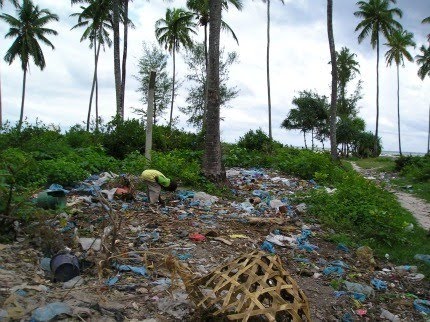
As part of her course work, Brashear went to Zanzibar to do a study on costal ecology in 2006. Zanzibar, an island off the coast of Tanzania, has in recent years become a destination for sun-seeking Europeans. It’s an island of stunning natural beauty, ringed with white sand beaches, crystal clear waters, and trash as far as the eye can see. 'Plastic bags, bottles, cans, batteries, chip bags,' she says. 'The landscape was covered with it.'

In her conversations with local teachers, government officials, hotel owners and ordinary citizens, Brashear came to a devastating realization. In pitching their trash out on the beach, the people of Zanzibar were not engaged in some form of aberrant behavior, nor were they being callous or indifferent to the environment. They were practicing an ancient form of recycling that up until now had worked just fine for them. In traditional Zanzibari culture, a shopping bag, for example, might be woven of grass, an organic material that could be discarded with the certain expectation that the earth would soon reclaim it. Not so with modern materials like plastic bags, which take forever to decompose.

Having brought capitalism to the island, and with it modern materials like plastics, we have, Brashear insists, 'a responsibility to help the people of Zanzibar figure out how to dispose of it.'

Back in Boulder, she spent a year thinking about the problem. Then one day her mother offered a simple suggestion, 'The solution,' she said, 'lies in education.' Mother, Brashear realized, was onto something.

She applied for and received a grant from the CU Undergraduate Research Opportunity Fund to design a curriculum to educate Zanzibaris on how to deal with their trash. While it emphasized reduction of consumption, Brashear’s program also contained some novel suggestions for recycling. Plastic bags, for example, could be cut into strips and crocheted into reusable purses and market bags.

An Italian environmental group active in Zanzibar, the Association of Rural Cooperation in Africa and Latin America (ACRA), was so impressed with her ideas, that they have funded a program to teach them to local school kids. They’re also pushing to have her suggestions included in the national school curriculum.

'To be honest,' she says, 'I still feel disheartened by the amount of trash we generate. I look at people’s grocery carts and see how much packaging it takes to produce just one meal…all that plastic and cardboard. There’s definitely a link to food production. So much of the trash in Zanzibar was food related… juice containers instead of juice from locally grown fruits, for example.'

Brashear is now working with an organization called Grow House in North Denver’s Swansea neighborhood, setting up greenhouses and encouraging area residents to grow their own organic produce. 'I believe,' she says, 'that the solution to the world’s trash problem lies in the localization of food production, and in the individual empowerment of people to control their own food sources.'

Thursday, 11 November 2010

STATEMENT BY THE SECRETARY GENERAL OF THE EAST AFRICAN COMMUNITY, AMB. JUMA V. MWAPACHU


Hotel Diamonds La Gemma de l'Est
Zanzibar, Tanzania

Your Excellency Dr. Jean Ping;
Chairperson of the AU Commission,

Your Excellency Abdoulie Janneh,
UN Deputy Secretary General and
Executive Secretary of the ECA,

Your Excellency Dr. Donald Kaberuka
President of the African Development Bank,

My Colleagues, the CEOs of RECs
and Regional Mechanisms,

Distinguished AUC Commissioners,


Hon. Beatrice Kiraso,
Deputy Secretary General, East African Community,

Distinguished Ladies and Gentlemen.


On behalf of the East African Community, I warmly welcome you to the United Republic of Tanzania and specifically to Zanzibar, the world famous Spice Islands and home to the World Heritage Site of Stone Town. I truly hope that you will not miss the chance to explore the beauty, serenity and splendour of these Islands that are rich in Arabic and Islamic civilization. A special warm welcome to you, Dr. Jean Ping. Your presence at meetings of the AU-RECs Coordination Committee is of great significance. As RECs we feel honoured and respected when you allow us the opportunity to interact with you at close quarters.

We meet in Zanzibar at a most historic moment in the political life of these islands and, indeed, of the Tanzanian Union itself. The Tanzania Presidential and House of Representatives elections which took place exactly eight days ago have opened a new page of democracy, peace and stability for Zanzibar and for the United Republic of Tanzania.

Following the recent constitutional change in Zanzibar to allow the formation of a Government of National Unity as a fundamental political governance principle, Zanzibar has this past week gone through the most peaceful, free and fair elections in history. The political rancour that used to embroil past elections has given way to a political modus vivendi whose driving ethos is the realization of peace, stability and progress for all Zanzibaris.

This new political and constitutional dispensation in Zanzibar augurs well for the consolidation of the Tanzania Union which represents Africa's model of political integration.

Your Excellency and Colleagues,

I believe that all of us have also closely followed the trends in the just ended Tanzania Union general elections. Close observers of the Tanzanian political scene would tell you that the elections this year have reflected a radical departure from those experienced since 1992 when Tanzania re-adopted a multi-party political system government. There has been a marked change in the electoral performance of the political parties, notably of those that oppose the ruling party, CCM.


For true democrats, this change is an important one in the African democratic political process. It shows that democracy and pluralism are taking root and that the electorate is becoming ever more aware of its political rights and choices. Africa needs to share these experiences especially where they reflect powerful trends towards political change but in environments that also manifest strong culture of peace and tranquility.


Your Excellency and Colleagues,

As we meet here today we cannot fail to be seized of the enormity of the mandate of the RECs as the building blocks of the African Union. We cannot also fail to be seized of the complexities of the issues and the serious capacity constraints the RECs face in discharging their mandate. The fact that we have structured this platform is clear recognition of the seriousness we place on our collective quest to share insights and experiences to better deliver on our lofty mandates.
The challenges we face hinge on a number of goals: good governance, peace and security; and social and economic development.

Similarly, there are challenges of a global dimension, such as climate change and unfavorable terms of trade, both of which require joint efforts and effective responses of essentially national but also of regional nature and scope. I am pleased to note that some of these challenges constitute the agenda of our deliberations at this meeting. But I am equally happy that our meeting will focus on how AU's building blocs are working together within the spirit of realizing broader African integration. The COMESA-EAC-SADC Tripartite is a unique model that should be hailed and replicated in other parts of Africa. The view that resides in certain quarters of integration opinion that this tripartite model seeks to undermine the larger continental quest is simply bizarre and impolitic.

Let me end my welcoming remarks by once again thanking the African Union Commission for accepting EAC's wish to host this meeting in Zanzibar. I trust you will find the environment here highly supportive of serious work. As we say in Kiswahili, KARIBUNI SANA.

Tuesday, 9 November 2010

Tanzania listed one of top 10 tourist destinations in 2011


DAR ES SALAAM, Nov. 8 (Xinhua) -- Tanzania has been named as one of the top 10 destinations in the world to visit in 2011 by an Australia-based international travel advisory firm as the east African country has a surprise to offer for tourists who are eager to visit the nation.

Tanzania is a place of great wonders, with national parks such as Serengeti and Kilimanjaro, the Spice Islands of Zanzibar and the famous Ngorongoro crater, said the local media on Monday, quoting a report issued by the Tanzania Tourist Board.

Besides, the country also has big herd of elephants, tree-climbing lions, chimpanzee sanctuaries in Gombe and Mahale and packs of wild dogs in Selous Game Reserve.

The country has the whole panoply of east Africa's wildlife including such rarities as the red colobus monkey, black rhino, hawksbill, leatherback turtles and Pemba flying foxes concentrated in an unrivalled collection of parks and reserves.

Besides Tanzania, Albania, Brazil, Cape Verde, Panama, Bulgaria, Vanuatu, Italy, Syria and Japan are the other top nine countries listed by the travel advisory firm Lonely Planet.

Monday, 1 November 2010

DK ALI MOHAMMED SHEIN - RAIS MTEULE WA ZANZIBAR.


Jumla ya kura zilizopigwa: 364,924

Kura halali:358,815

Kura zilizoharibika:6109

DK ALI MOHAMMED SHEIN :179,809 - 50.1%

MAALIM SEIF SHARIF HAMAD :176,338 - 49.1%

Saturday, 30 October 2010

Who's Who - Election Backgrounder


Tanzanians go to the polls on 31 October to elect their President and Members of Parliament for the next five years. Seven presidential candidates will take part in the polls, including the incumbent Jakaya Kikwete who is running for a second term.

Other candidates are Willibrod Slaa and Ibrahim Lipumba of the main opposition parties, the Chama Cha Demokrasia na Maendelo (CHADEMA) and the Civic United Front (CUF) respectively.

Kikwete is representing Chama Cha Mapinduzi (CCM), which has been in power since independence in 1961.

The Tanzanian parliament, the Bunge is made up of 232 members that are elected while the remainder is appointed. Under the country's Constitution, there are 75 seats guaranteed for women, representing an additional 30 percent of the figure of elected seats.

The 75 women members are appointed by the National Electoral Commission drawn from lists submitted by the parties in parliament, and based on the number of votes won by the parties represented in parliament.

In the last election, CCM won 206 of the elected seats, that is almost 90 percent of the elected seats in parliament. Kikwete won the presidential election with 80.2 percent of the popular vote.

The CUF won 19 seats with the five going to CHADEMA and one each to the Tanzania Labour Party (TLP) and the United Democratic Party (UDP).

The national elections are conducted on the same day as those in the Zanzibar islands, where Zanzibaris vote twice, once for the national President and parliament, and once for their own local President and parliament, which is more like local government.

In the Zanzibar elections, the outcome of the polls will usher in a historic achievement that will see the formation of a unity government, which includes a President from the wining party, first Vice President from the second-placed party and second Vice President from the wining party. Ministries are to be allocated on a proportional basis.

CCM has selected Vice President Ali Mohamed Shein as its candidate for the Zanzibar presidential polls. Shein replaces President Amani Abeid Karume, whose second and final term as Zanzibar President ends in October.

CUF will be represented by Seif Sharif Hamad, who is contesting the polls for the fourth time after failed attempts in 1995, 2000 and 2005.

Zanzibar is a part of the United Republic of Tanzania. However, the Zanzibar archipelago, comprising the two main islands of Unguja and Pemba, retains its own governance structure and electoral system in addition to the Union structures.

Zanzibar and Tanganyika, as the mainland was then known, entered into a Union agreement in 1964 to form the United Republic of Tanzania, whose main objective is to build a unified society based on freedom, human rights and peaceful existence.

The Southern African Development Community (SADC) Election Observer Mission (SEOM) has deployed more than 100 observers to monitor the electoral process in three phases, namely, the pre-election, the election and the post-elections.

SADC Director for Politics, Defence and Security, Tanki Mothae said the pre-election period has been peaceful, adding that the atmosphere should prevail throughout the electoral process.

He said a draft report on how the polls were conducted would be released after the elections. This is in line with the SADC Principles and Guidelines Governing Democratic Elections, which encourages Member States to promote common political values and systems.

The SADC observer team is expected to interact with other regional and international missions such as the African Union and European Union that are in Tanzania at the invitation of the government.

The conduct of the different observer missions will be guided by the Constitution and electoral laws of Tanzania. Foreign Affairs and International Cooperation Minister Bernard Membe has urged observers to adhere to these standards so that the polls are free and fair.

"Observers are expected to be impartial, operate within their mandate and respect the law of the land and authorities responsible for regulating the elections," he said


AllAfrica.com

Thursday, 28 October 2010

Kikwete tipped for re-election


Dar es Salaam - East Africa's largest country prepared for its fourth multi-party polls on Sunday, with President Jakaya Kikwete expected to keep his job despite feistier-than-usual opposition.

Voters will also choose leaders on Tanzania's semi-autonomous Zanzibar island under a new power-sharing system aimed at ending perennial election violence.

Two opinion polls have given Kikwete, 60, a wide margin over his six opponents as he seeks a second and final term in office.

Opposition to his ruling Chama Cha Mapinduzi (CCM - Revolution Party) is at its strongest since the resumption of multiparty politics in 1992 and Kikwete is expected to win with a lower margin than his 80 percent landslide in 2005.

Kikwete, a former foreign minister, has promised to reduce poverty, improve health, education and transport, but his opponents criticised the new pledges, saying poverty is still high despite CCM's rule since 1961 independence.

Tanzania is one of the world's least developed countries, with an economy reliant on non-industrialised agriculture that employs nearly 80 percent of the workforce.

Other economic sectors include mining, construction, manufacturing and tourism Ä for which it boasts the expansive Serengeti park and Kilimanjaro, Africa's tallest mountain, as well as the idyllic Zanzibar archipelago.

The ruling party remained confident it would win the elections, in which some 19 million voters will also elect lawmakers and local leaders.

“We are satisfied with the trend of our campaigns so far,” said Abdulrahman Kinana, CCM's election committee chairman.

“We are going to emerge with a big victory in the presidential, parliamentary and councillors' polls,” he told reporters earlier this month.

One of Kikwete's main opponents is three-time presidential loser Ibrahim Lipumba of the Civic United Front (CUF).

A former University of Dar es Salaam economics professor, Lipumba lost twice to Kikwete's predecessor Benjamin Mkapa in 1995 and 2000 and to Kikwete himself in 2005, and opinion polls have placed him third.

First-time presidential candidate and veteran lawmaker Wilbrod Slaa is Kikwete's closest challenger, but registered a paltry 10

percent in opinion polls released earlier this month.

On the Zanzibar archipelago, a top tourist destination but politically volatile, some 400 000 voters are also called to cast their ballots on Sunday.

CCM's Ali Mohamed Shein, 62, and CUF's 67-year-old Seif Sharif Hamad are the top candidates for Zanzibar's presidency. The two also backed a July referendum to entrench a power-sharing government in the constitution.

Under the new accord, the winning pary takes the presidency while the runners-up are handed the position of vice-president.

Despite a peaceful campaigns, the CUF has voiced concern about the Zanzibar Electoral Commision's (ZEC) transparency.

“We are still concerned about transparency. ZEC has released a copy of voter registers with some irregularities,” the party's poll director Juma Sanani said.

“There are about 10 000 uncollected voters cards which were supposed to be stored by ZEC, but the cards are now in the wrong hands and may be used for double voting.”

Geographically, Zanzibar archipelago comprises three isles, but the third, Mafia, falls under the mainland administratively.

Zanzibar formed a union government in 1964 with mainland Tanganyika, as it was then known, to establish the United Republic of Tanzania.

The CCM has been at the helm since 1977 after replacing a party that ruled the country since independence from Britain in 1961. -

AFP

Monday, 25 October 2010

VOICES II PROJECT SUPPORTS SWAHILI FASHION WEEK 2010


Press conference at RSVP Much More where Co-founder of MTOKO designs discusses with a journalist about their designs for Malaria Hikubaliki being shown at Swahili Fashion Week 2010..


Anna McCartney-Melstad (L), three designers showacasing ideas from Malaria Haikubaliki campaign(Middle) and Fauziyat Abood, during the press conference at RSVP Much More, Dar es Salaam

African, Arab partnership must overcome history of slavery (Feature)


By Anaclet Rwegayura, PANA Correspondent Dar es Salaam, Tanzania (PANA) - When Libyan leader Mouammar Kadhafi recently apologised on behalf of Arab countries that were involved in the African slave trade, some observers regarded his remarks as whimsical, especially because few are wil ling to broach new ideas about the denigration of human dignity engendered by the subjection of Africans to the evils of slave trade.

Many in Africa learnt about slavery as part of history lessons at school, while many have also seen or travelled along the trail of sites, towns, road markers a n d seaports retracing the Arab Slave Trade in Tanzania and in the rest of East Africa. Beyon d that, not much has happened.

According to available studies, more than five million Africans were captured, e nslaved, and shipped to the Middle East, India, Asia, and also to the West.

Today's African population abhors slavery as much as their ancestors did and, as it appears, many will want more than an apology. Analysts have however commende d the Libyan leader for his courage in not only talking openly about the issue but als o apologising on behalf of the Arab countries that were involved in slave trade.

''Though coming belatedly, brother Kadhafi's apology is commendable,'' said Edis on Maige, a retired Tanzanian teacher. ''No Arab leader had shown such courage a n d openness to admit the atrocities that their forefathers committed against the Af rican race.

''Despite the passage of time, hidden grudges are still there in our societies a gainst foreigners who perpetuated slave labour. Accounts of people who had suffe r ed under Arab slavery have been handed down from generation to generation. This explains why local people of Arab descent are sometimes detested, especially when they seek in fluential positions,'' Maige said.

As an outcome of entrenched slavery, Arabs became major planters of coconuts, cloves and other spices in Zanzibar and along East African coastal areas in the 1800s. The crops have since then been the economic mainstay of the islands, though their production no longer booms as they used to be until the 1970s.

Official abolition of slavery in the isles in 1897 did not make a big difference for the majority of the population. The abolition decree by the colonial rulers

and the measures taken to implement it, as it turned out, were designed to bolster Arab slave own ers, to tie ex-slaves to the plantations through contracts and to discourage the independence of workers.

For several years, it became apparent that the number of slaves who were being f reed remained modest and that ex-slaves were restricted from accessing free labour market.

According to records, the end of the slave trade in coastal East Africa, including Zanzibar, came through the gradual destruction of the complex networks that g a thered and distributed slaves.

Zanzibar's clove plantations had survived to enrich Arabs because of slave labour, while slavery itself became an integrated social system under which Africans w ere controlled as personal property.

The changing political landscape of East Africa greatly contributed to the freed om of slaves and reduced their economic dependence on Arab landowners. The expan s ion of British imperial activity increased the demand for caravan porters and Zanzibar became a centre of recruitment.

With Mombasa port in Kenya becoming a staging area for caravans to Uganda and co nstruction of the railway linking the two countries, new demand for workers were
created.

Therefore, slave owners in Zanzibar witnessed a great exodus as slaves escaped t o freedom and new economic opportunities in railway camps.

Although the work in those camps was menial and often dangerous, a slave who deserted his master in the late 1890s could survive in dignity. Wages on the rail road were above the going rate for hired labour on the coast, where economic options for ex-slaves were narrower.

They had no difficulty with the concept of wage labour, but they wanted to contr ol the condition under which they worked, to make cash earnings part of their ec o nomic lives rather than to subordinate themselves to plantation labour. The fertile soils of Zanzibar made it possible for a small plot to produce enough crops for a family ' s subsistence and a surplus for sale.

With a cash income, they could buy all provisions for which they had in the past relied on their owner.

Arab landowners eventually failed to keep ex-slaves as personal dependents tied to their estates and, as the wind of freedom swept across sub-Saharan Africa, th e role of the Arab sultanate and the colonial state in Zanzibar came into question.

By 12 January 1964, the Arab predominance and their ruling structure were topple d by a revolution that gave birth to the present Zanzibar, where all citizens enjoy the social and economic benefits of the state.

Despite the history of slavery involving Arabs, however, the relationship betwee n Africa and the Arab world is not so much represented by the fate of slavery victims.

According to Maige, it is heartening to see African and Arab leaders coming together to put a new life in the relationship of their worlds.

''The basis of our relationship had to change fundamentally. We no longer accept subordination in whatever joint ventures the two sides may agree to undertake,' ' he said.

But Maige warned that African politicians should not use slave trade as an excus e for Africa's underdevelopment.

''Slave trade did not mean the demise of the African race. Renewed partnership w ith the Arab nations should not be a source of disputes with Africa, but it shou l d enable populations on both sides to advance to better standards of living beca u se we all need each other,'' he added.